
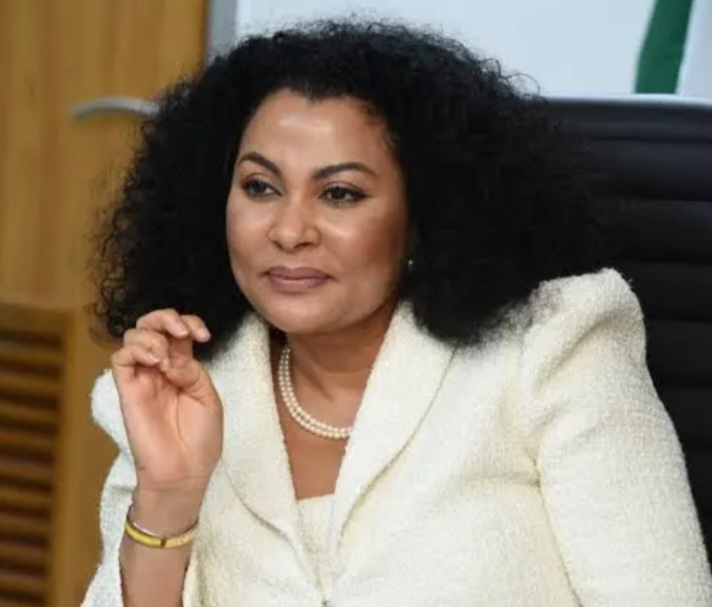
President Bola Tinubu is expected to present the 2027 Appropriation Bill to the National Assembly before the end of 2026, the Minister of State for Budget and Economic Planning, Doris Uzoka-Anite, has said.
Uzoka-Anite disclosed this on Wednesday while briefing State House correspondents on decisions taken at the Federal Executive Council meeting chaired by Tinubu at the State House in Abuja.

She also announced that the council had endorsed the National Development Plan for 2026 to 2030 and approved new policy measures aimed at addressing child stunting and improving food and nutrition security.
The minister’s briefing followed the 32nd Nigerian Economic Summit, held in Abuja from October 26 to October 28, which brought together stakeholders to discuss the country’s economic priorities.
Among the policy decisions announced was the approval of a revised National Policy on Food and Nutrition for 2026. The framework is intended to replace previous policies and establish sustainable funding arrangements while improving cooperation among government ministries and development partners.
The proposed framework covers areas including agriculture, livestock, health and education, with the aim of strengthening coordination in tackling malnutrition and improving food security.
The development comes as the Federal Government prepares its next annual budget. Tinubu signed the Appropriation (Amendment) (No. 4) Bill, 2025, into law on September 30, 2026, according to the information provided in the report.
Separately, the Minister of Finance and Coordinating Minister of the Economy, Taiwo Oyedele, provided further clarification on the proposed $21.7 billion borrowing plan transmitted by the President to the National Assembly.
Oyedele said the proposal was designed to finance investments in infrastructure and other assets rather than routine government expenditure. He explained that the package represented a multi-year investment programme spanning approximately five years, not an immediate withdrawal of the entire amount.
According to the finance minister, $10.6 billion of the proposed financing would be allocated to major transport infrastructure, including the Sokoto-Badagry Highway, Lagos-Calabar Coastal Highway and Kano-Kaduna Metro Rail.
He also said more than $7.9 billion was expected to come from multilateral and bilateral development partners, with the World Bank accounting for $5 billion. The financing was reported to carry an average interest rate of approximately 2.1 per cent.
The proposed package also includes $3.3 billion for projects by state governments and $1.45 billion for the Federal Capital Territory.
The borrowing proposal remains subject to the applicable approval processes, while the details of the projects and financing arrangements will determine how the funds are ultimately deployed.
The budget presentation, development plan and revised nutrition policy form part of the Federal Government’s wider economic planning agenda for the coming years.
