
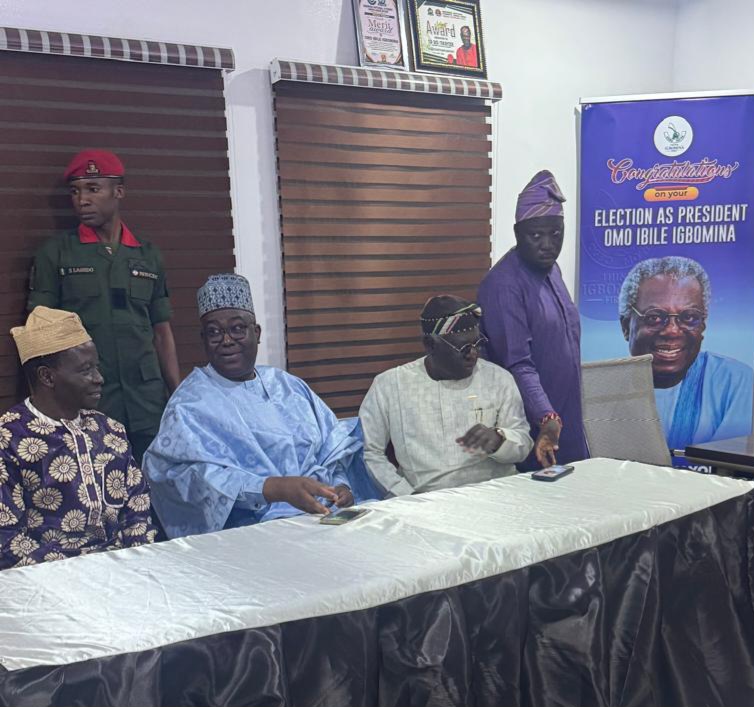
The National President of Omo Ibile Igbomina, Sir Bisi Fakayode, has hosted the presidential candidate of the Accord Party, Dr. Gbenga Olawepo-Hashim, at the Omo Ibile Igbomina House in Ganmo, Kwara State.
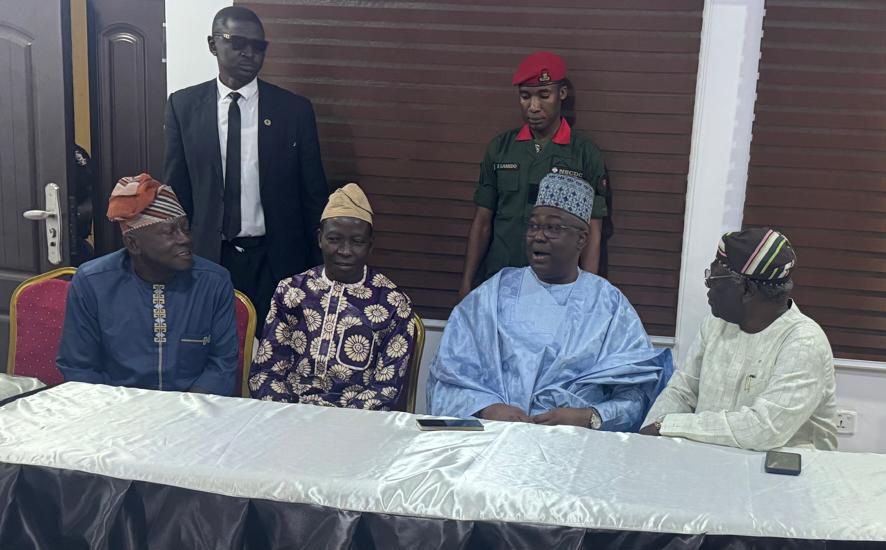
The courtesy visit afforded both leaders the opportunity to reflect on their relationship spanning over three decades, review development efforts at the Igbomina House, and examine lessons from Igbomina’s tradition of peaceful coexistence for Nigeria’s nation-building.

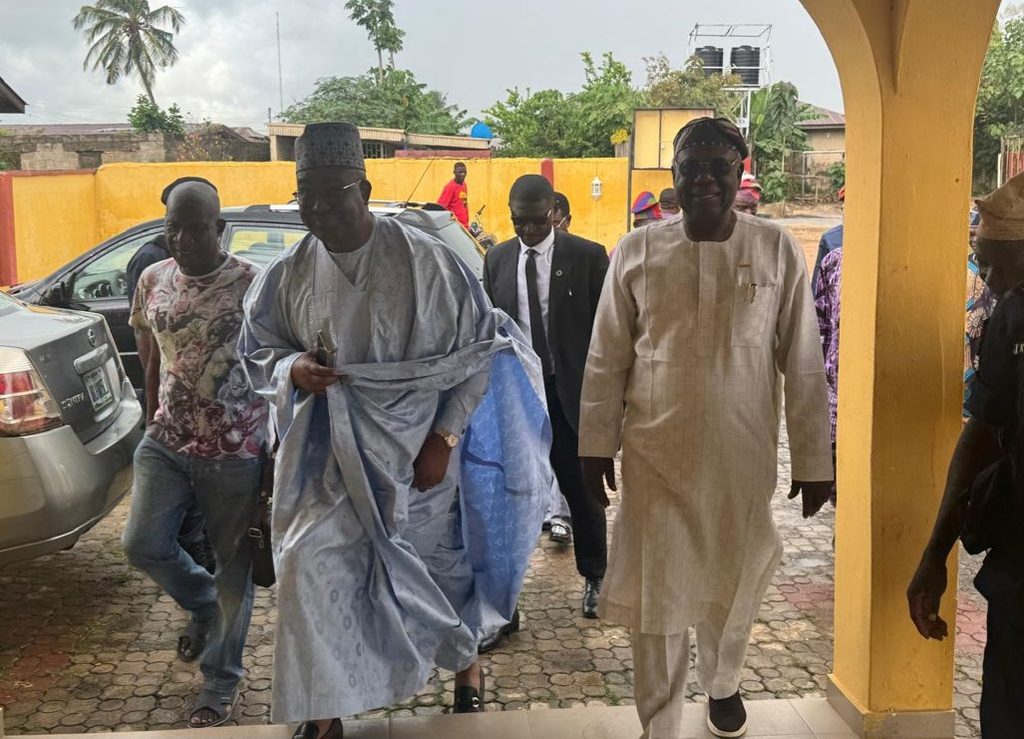
Fakayode, who took Hashim on a tour of the facility, showcased renovation and rehabilitation projects executed under his leadership, including ongoing improvements at the adjoining hospitality facility.
He expressed appreciation for Hashim’s consistent support, noting that the Accord presidential candidate was among the first three prominent figures to back the present leadership of the socio-cultural group from its inception.
“What we are witnessing today did not start today. You supported and encouraged this journey from the beginning. From my days as a local government chairman to where God has brought me today as National President of Omo Ibile Igbomina, your support and encouragement have been part of this journey,” Fakayode stated.
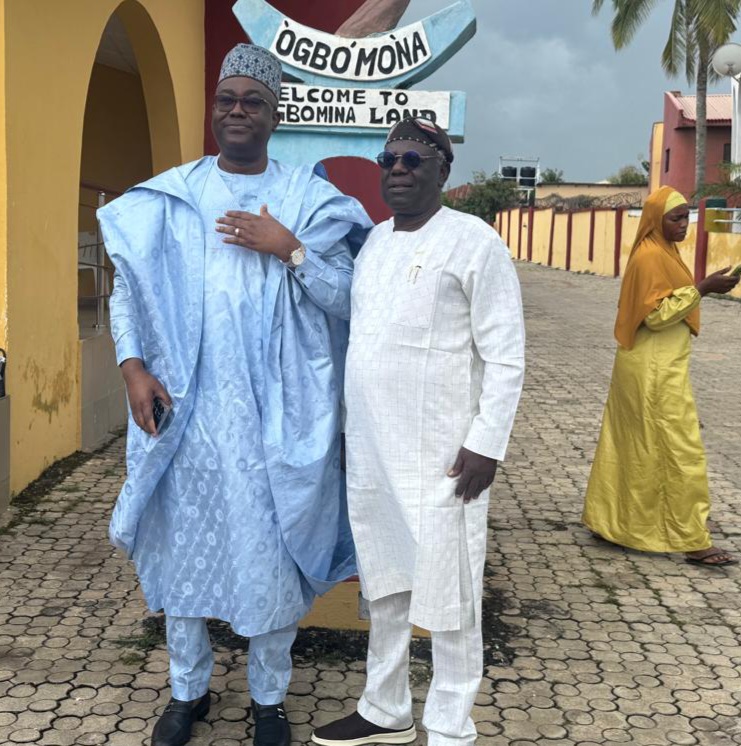
Fakayode described Hashim as a friend, supporter and critical stakeholder of Igbomina, stressing that although his ancestral roots lie outside Kwara State, his upbringing and long association with the people have forged a strong bond.
In his remarks, Hashim commended Fakayode for the visible transformation at the Igbomina House and urged the leadership to sustain efforts aimed at strengthening the institution and advancing the interests of Igbomina people.
Hashim said his connection to Igbominaland goes beyond politics, recalling that while his ancestral origin is in Yauri, he was raised by an Igbomina family in New Bussa, Niger State.
According to him, the upbringing shaped his worldview on community, identity and belonging, and exposed him to Igbomina’s longstanding culture of accommodation.
He noted that Igbomina communities have historically coexisted with Fulani, Hausa, Tiv, Zuru, Birom, Igala and other ethnic groups, who were integrated into the social, economic and political life of their host communities while retaining their distinct identities.
Hashim described this as evidence of the workability and resilience of cultural pluralism, insisting that diversity does not necessarily lead to fragmentation.
“We don’t have to become identical to become one nation. We can be different and yet belong together,” he said.
The Accord presidential candidate said his visit was more than a social call, but “a reminiscence of where I came from, a celebration of what I have experienced, and an inspiration for what Nigeria can still become.”
He maintained that Nigeria’s diversity, if properly organised, mutually respected and institutionally protected, could become one of the country’s greatest strengths.
