
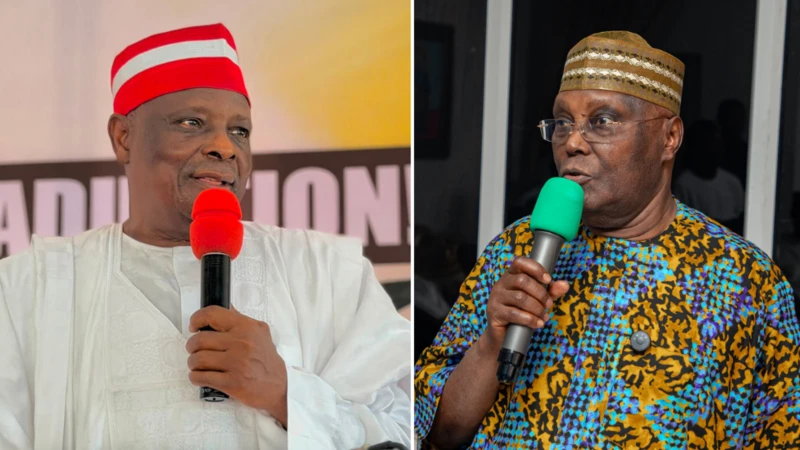
An All Progressives Congress chieftain, Dr Musa Iliyasu Kwankwaso, has argued that former Vice President Atiku Abubakar would need broader political support beyond the Hausa-Fulani population to challenge President Bola Tinubu in the 2027 presidential election.
Kwankwaso stated this in a statement signed by him on Monday, claiming that political attitudes in northern Nigeria had changed and that ethnic or regional identity alone would not guarantee electoral support.

He argued that Atiku did not enjoy the same level of acceptance and political influence that the late former President Muhammadu Buhari had across the North.
“Atiku is not Buhari. He does not possess the size, stature and acceptance of the late Nigerian President to pose a threat to President Tinubu,” Kwankwaso said.
The APC chieftain also questioned Atiku’s record during his eight years as vice president, arguing that voters were increasingly concerned about leadership performance and policies that could improve their living conditions.
“Atiku has yet to show Nigerians what he achieved during his eight years as vice president. Voters are now more concerned about leadership performance, development and policies that can improve their lives than ethnic or religious sentiments,” he said.
Kwankwaso maintained that appeals based on ethnic and religious identity would not be enough to secure northern voters’ support in the next presidential election.
“The North has gone beyond primordial sentiment, and his penchant for relying on the ethno-religious card will certainly fail him,” he added.
The APC chieftain further alleged that some of Atiku’s political associates were concerned about his ability to secure support among Hausa-Fulani voters. However, he did not identify the associates or provide evidence to support the claim in the statement.
Kwankwaso expressed confidence in Tinubu’s political standing in northern Nigeria, despite efforts by opposition figures to form a regional alliance against the President.
“Tinubu would remain a formidable contender in the North despite attempts by opposition forces to build a regional coalition against the President,” he said.
The comments form part of the political debate ahead of the 2027 presidential election, with party figures assessing the importance of regional support, candidates’ records and policy proposals in attracting voters.
