
The Federal Government has restated its commitment to adopting Computer-Based Test (CBT) for all public examinations, starting with the West African Examinations Council (WAEC) and eventually extending to others like the National Examinations Council (NECO) by 2026.
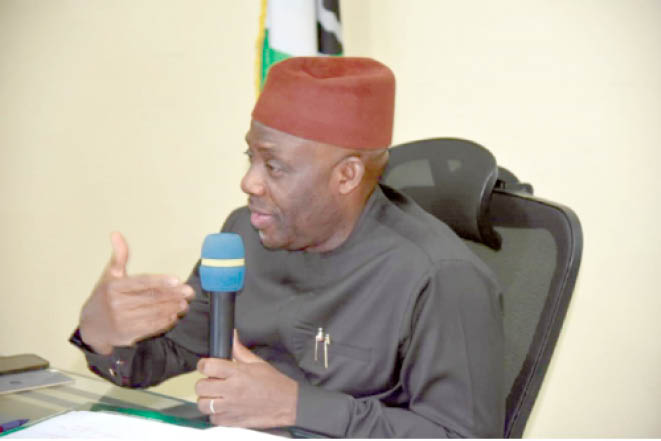
Minister of Education, Dr. Tunji Alausa, gave this assurance on Wednesday while monitoring the ongoing WAEC CBT exams in Abuja, according to the News Agency of Nigeria (NAN).

Dr. Alausa described the transition from the traditional pen-and-paper method to CBT as a bold and historic move aimed at promoting transparency and curbing examination malpractice.
“We are working tirelessly to eliminate all forms of exam fraud, and WAEC is already setting the pace,” he said.
He explained that the CBT system has significantly reduced the chances of cheating, noting that digital exams offer better control and integrity.
“There’s clear evidence that the use of technology in exams drastically cuts down malpractice to nearly zero,” he stated.
The Minister also praised WAEC’s internal security systems, highlighting that the CBT platform is hosted on a secure Local Area Network (LAN), which makes it extremely difficult to breach.
He revealed that from November 2025, all WAEC multiple-choice papers will be conducted through CBT. Essay-based sections and NECO examinations are expected to follow by 2026.
While acknowledging challenges in infrastructure and logistics, especially in rural areas, Dr. Alausa said the government is already working on scalable solutions.
“We know we may not have every infrastructure ready by November, but we are determined to get there. It’s a challenge the government must rise up to,” he added.
The Minister also addressed concerns around conducting multiple exam papers via CBT.
“In WAEC, students usually sit for about eight or nine subjects spread across several days. These are the logistics we are planning for, and efforts are already underway,” he explained.
The 2025 WAEC examinations, which started on April 24, are expected to end on June 20.
A total of 1,973,253 candidates from 23,554 schools are participating this year. Of this number, 979,228 are male (49.63%) while 994,025 are female (50.37%).
