
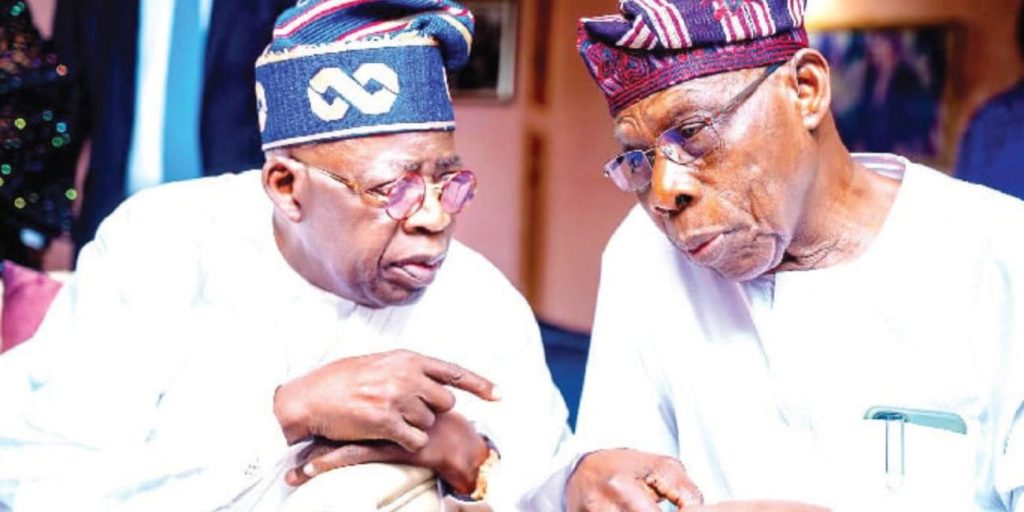
The Presidency has cautioned former President Olusegun Obasanjo over his recent criticism of President Bola Tinubu on the rising insecurity, insisting that he is not in the best position to speak on the matter because terrorism allegedly took root during his tenure.
A fresh statement by the Special Adviser to the President on Media and Public Communication, Sunday Dare, challenged Obasanjo’s suggestion that Tinubu should seek foreign help if he cannot manage the country’s security challenges. Dare described the proposal as an unstatesmanlike call for Nigeria to hand over its internal defence to foreign powers.

Posting on his verified X account, the presidential aide argued that before Obasanjo advises the government to surrender sovereignty, he must first examine what he failed to confront when extremist groups allegedly started forming under his watch.
In the post titled Between Tinubu’s capability and the ignobility of pseudo statesmanship, Dare said the Tinubu administration would not allow those who, in his words, “midwifed Nigeria’s early security failures” to rewrite history.
He further stated that recent comments by Obasanjo and others who frequently criticise the presidency attempt to portray Tinubu as unable to protect Nigerians, but he stressed that such remarks ignore the reality that the country is currently fighting terrorists of various origins.
According to the Presidency, those criticising the administration were the same people who looked away when early signs of extremist violence appeared, only to now “sit in judgment” over current efforts.
The statement also dismissed the idea of outsourcing Nigeria’s internal security, describing it as a form of surrender. It urged Obasanjo to reflect on what he failed to address when extremist groups were still small and manageable.
The Presidency noted that Nigeria is under attack from multiple layers of violent groups, including international terrorist organisations, Sahel-based jihadist franchises, extremist cells disguising themselves as bandits, cross-border attackers and ideological insurgents operating in remote areas.
The post stressed that these groups share money, ideology, weapons and intelligence in their attempts to weaken the Nigerian state and terrorise citizens. It urged Nigerians to recognise all of them as terrorists, regardless of their labels.
The Presidency added that Boko Haram’s early foundations allegedly developed during Obasanjo’s civilian administration because decisive action was not taken at the time. It said this failure allowed the group to evolve from an extremist sect into a full-blown insurgency and a regional threat aligned with global jihadist movements.
It concluded that Obasanjo, under whose leadership the early roots of terrorism were planted, should not be the one lecturing a sitting president who is now dealing with the consequences.
