
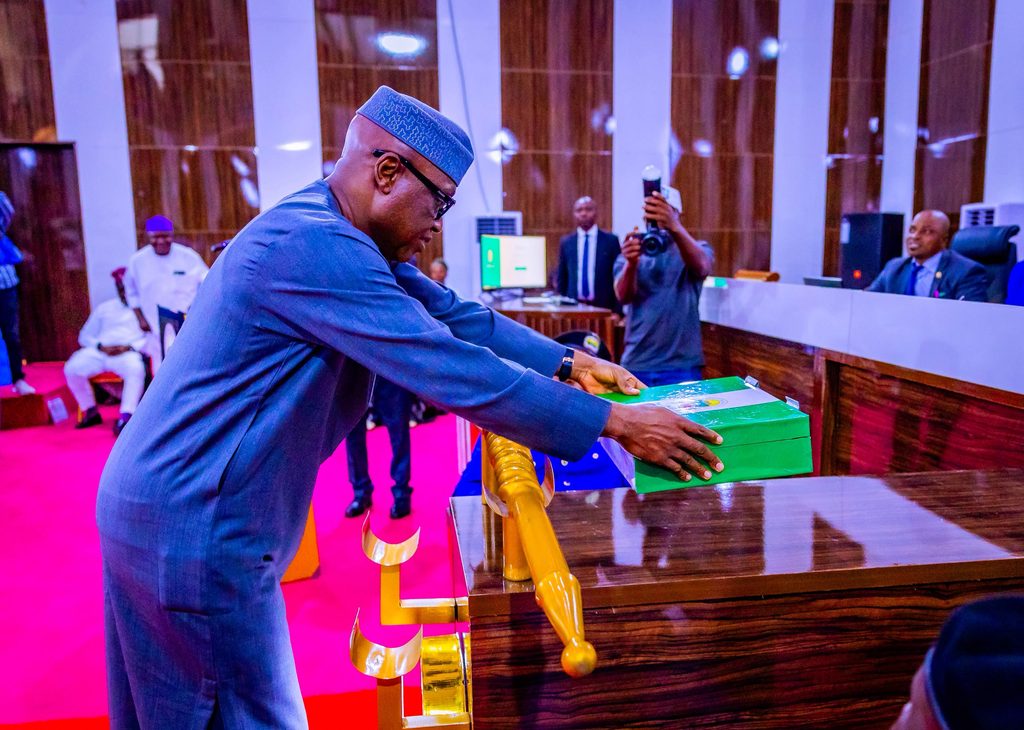
Ekiti State Governor, Mr Biodun Oyebanji, on Thursday presented a budget proposal of N490.74 billion for the 2027 fiscal year to the Ekiti State House of Assembly.
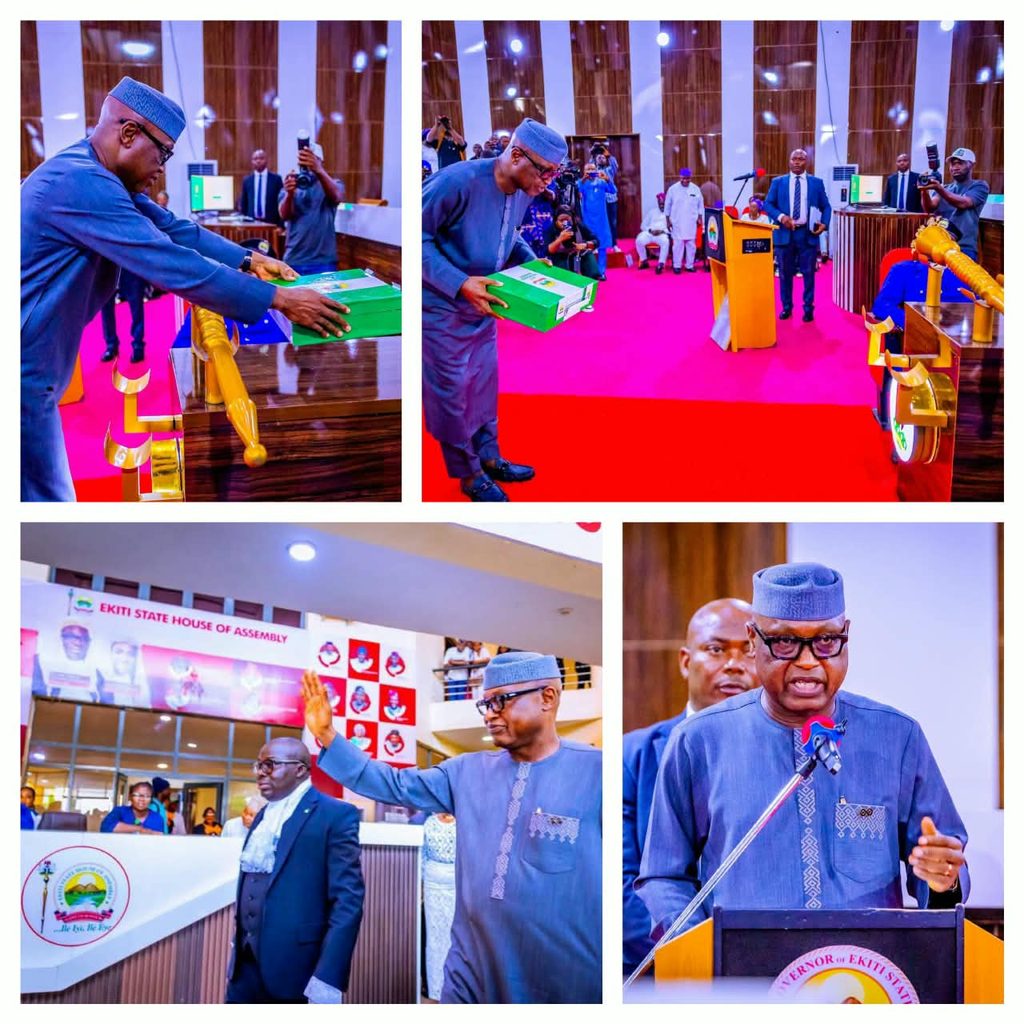
The Governor described the proposal, christened “Budget of Sustainable Progress and Prosperity,” as a roadmap for consolidating the gains of his administration and sustaining the state’s development trajectory.

Presenting the Appropriation Bill before lawmakers in Ado-Ekiti, Oyebanji said the 2027 budget represents the policy direction of his administration for the first year of its new four-year term and was designed to address the needs and aspirations of the people.
According to him, the budget is made up of recurrent expenditure of N275.68 billion, representing 56 per cent of the total budget size, and capital expenditure of N215.06 billion, representing 44 per cent.
The proposed 2027 budget is about 18 per cent higher than the approved 2026 budget of N415.57 billion, which had N221.87 billion for recurrent and N193.70 billion for capital expenditure.
Oyebanji said the budget would focus on infrastructure development, agriculture and food security, health, education, youth skills and innovation, job creation, e-governance and technology, as well as completion of ongoing projects across the state.
He explained that substantial provision for capital expenditure would support infrastructure development, agriculture and wealth creation, with the economic sector receiving N147.98 billion, representing 69 per cent of the capital budget.
The allocation, he said, would cover clearing and tractorisation, livestock development, farm settlements, farmstead roads, electricity and road infrastructure, among others.
The Governor said revenue sources expected to fund the N490.74 billion budget include opening balance, federal allocation, Value Added Tax (VAT), independent revenue, external grants drawdown and planned loans.
He expressed optimism about the state’s revenue outlook, noting that internally generated revenue grew from N13 billion in 2022 to over N55 billion in 2025.
Oyebanji said the 2027 budget was a product of statewide consultations, guided by the Ekiti State Development Plan 2021-2050, the Medium-Term Expenditure Framework (MTEF) 2027-2029 and the six pillars of his administration.
He added that the budget was prepared in line with the National Chart of Accounts and other development frameworks in line with global best practice.
The Governor commended President Bola Ahmed Tinubu for the Federal Government’s economic reforms, noting that the reforms, alongside VAT and federation account revenues, contributed to the state’s revenue performance.
He disclosed that the state recorded actual revenue of N218.97 billion between January and June 2026, representing 105 per cent of the pro-rated target for the period.
Highlighting the objectives of the 2027 budget, Oyebanji said it would promote budget realism and execution by improving IGR to reduce reliance on Federation Account, especially for recurrent expenditure, promote transparency and accountability through open administration partnership, provide qualitative education, strengthen agribusiness and promote adequate and quality healthcare.
He said the budget would also help realise his administration’s vision of making Ekiti State the best place to live, work, visit and invest by 2050, attract investors, provide incentives for new businesses, create employment opportunities, improve local content through skills development, enhance e-governance and technological innovation in public service, provide a tourist-friendly environment and complete all ongoing projects.
“I am very pleased to stand before you today in this hallowed chamber to present the 2027 Appropriation Bill and Budget Estimates in fulfillment of my constitutional responsibility as Governor. As the administration prepares to transit into another four-year term, this presentation serves as a vital roadmap for the first year of the new tenure. By shared providence, it also coincides with the week of commemoration of our 30th anniversary as a State.
“The proposed 2027 Budget Estimates reflect the priority needs of our people across towns and communities. The needs were collected from town hall meetings I held across the three senatorial districts. The proposed Budget takes its root from the State Development Plan 2021-2050, the MTEF 2027-2029, which had earlier been forwarded to this Honourable House, and the Six Pillars of the Administration,” he said.
“The proposed 2027 Budget has also been designed to create wealth by providing a friendly atmosphere that will attract external capital, support cooperative societies and empower Micro, Small and Medium Scale Enterprises (MSMEs). This will consolidate our efforts in making Ekiti State a preferred destination to live, work, invest and relax,” the Governor added.
In his welcome address, the Speaker of the Ekiti State House of Assembly, Rt. Hon. Adeoye Aribasoye, commended Governor Oyebanji for steady and purposeful leadership, particularly in infrastructure, healthcare, education and workers’ welfare, noting that the administration’s efforts had produced tangible results across the 16 local government areas.
Aribasoye expressed confidence that the financial prudence demonstrated in the implementation of the 2026 budget would provide a strong foundation for consolidation in 2027.
He assured that the Assembly would consider the 2027 budget with patriotism, objectivity and thoroughness, with focus on constitutionality, realistic revenue projections, stakeholder engagement, equitable distribution of projects and appropriate prioritisation of recurrent and capital expenditure.
The Speaker charged accounting officers and heads of Ministries, Departments and Agencies (MDAs) to adequately prepare for budget defence, warning that the House would fully exercise its constitutional powers and that MDAs must provide facts, figures, clear implementation plans and demonstrable evidence of readiness to execute proposed programmes.
Present at the event were the Deputy Governor, Chief (Mrs) Monisade Afuye; wife of the Governor, Dr Olayemi Oyebanji; Head of Service, Dr Folakemi Olomojobi; Chief of Staff, Mr Niyi Adebayo; members of the State House of Assembly and State Executive Council, traditional rulers, among others.
