
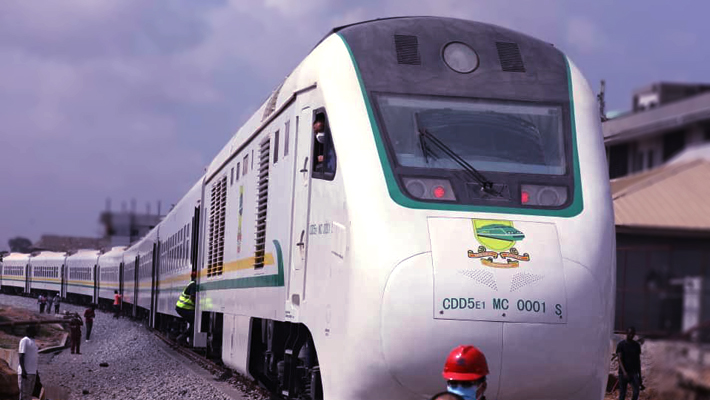
Passengers on the Abuja–Kaduna rail corridor have raised alarm over alleged ticket racketeering, overcrowding and mechanical failures, describing recent journeys as frustrating and unsafe.
Commuters who spoke in Abuja said a trip designed to last about two hours stretched beyond three and a half hours, with many passengers reportedly standing throughout the journey.

Several travellers alleged that tickets were difficult to obtain through the official booking platform of the Nigerian Railway Corporation, claiming the system was frequently inaccessible or fully booked. Some passengers further alleged that officials sold tickets at inflated prices, above the official fare.
One passenger recounted being issued tickets that were not in his group’s names and said they were later told to occupy any available seats, forcing them to stand when rightful seat holders arrived.
Beyond ticketing concerns, travellers also reported operational challenges, including overheating of a power unit supplying electricity to the coaches.
According to eyewitness accounts, attendants were seen pouring water on the unit during the trip, with each incident reportedly causing the air conditioning and lighting systems to shut down temporarily.
Passengers said the situation left coaches in darkness and discomfort, with the train slowing considerably during the interruptions. Some expressed fears that the reduced speed could pose security risks along the corridor.
The Abuja–Kaduna standard gauge railway was introduced as a safer alternative to the often dangerous road route between the two cities, but several first-time users said their experiences fell short of expectations.
Reacting to the claims, a spokesperson to the Managing Director of the Nigerian Railway Corporation, Kayode Opeifa, denied that tickets are issued without proper documentation. He maintained that bookings are processed electronically with passenger details, including National Identification Numbers.
The official also rejected allegations of overbooking, insisting tickets are sold strictly according to available capacity. However, he acknowledged that passengers affected by failed online transactions may be rescheduled, and in limited situations could be allowed to stand if they insist on travelling.
On the reported overheating, the NRC clarified that it was the power car generator — not the locomotive engine — that experienced issues, noting that such technical faults had occurred previously but were addressed.
Management further explained that travel time was extended to about three hours following a safety review after an accident in August 2025, adding that plans were underway to increase the number of daily trips on the corridor.
Despite the explanations, many commuters say confidence in the service has weakened. Stakeholders are now calling for reforms, improved ticketing transparency, expanded capacity and stricter operational oversight to restore public trust in the Abuja–Kaduna rail line.
