
By Ayodele Abere
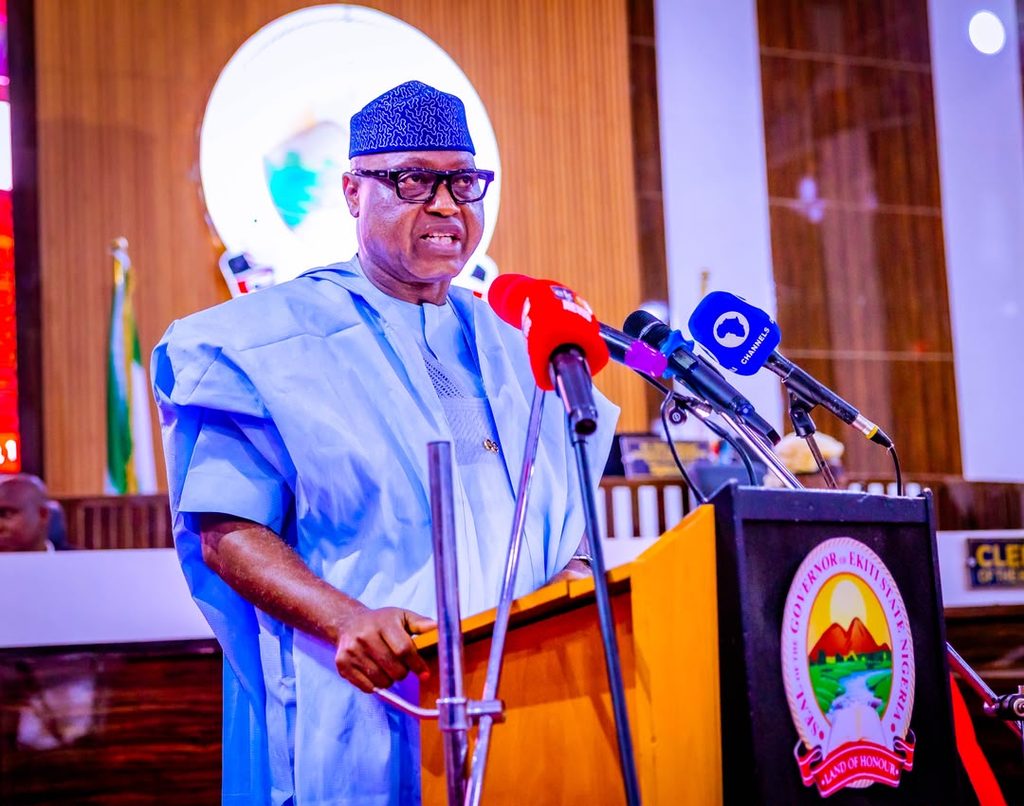
History finally smiled on Ekiti State on October 16, 2026. At the Ekiti Parapo Pavilion in Ado-Ekiti, Governor Biodun Abayomi Oyebanji took the oath of office for a second term, becoming the first governor since the state was created on October 1, 1996, to secure back-to-back victory at the polls.

For 30 years, the Land of Honour was trapped in a painful cycle. Governors came, governed for four years and left, often in controversial circumstances. Impeachments, judicial interventions, emergency rule and bitter transitions became the norm. Projects started by one administration were abandoned by the next. Policies were reversed. Development was always restarting, never consolidating.
His re-election on June 20, 2026 was not ordinary. With 319,224 votes, representing 85.72 per cent of valid votes, he swept all 16 local government areas and 175 out of 177 wards. He even won Ikere-Ekiti, the political base of his closest rival. Before the election, he had secured the support of all living former governors, Niyi Adebayo, Ayodele Fayose, Segun Oni and Kayode Fayemi, a unity no governor before him enjoyed.
That kind of mandate is earned, not bought. It was the reward for a first term built on discipline, humility and quiet delivery.
Through his six-pillar agenda, Oyebanji brought back fiscal sanity, paid workers and pensioners promptly, rebuilt critical infrastructure, invested in education and health, and made Ekiti one of Nigeria’s most peaceful and investment-friendly states.
Continuity means projects will be finished. The Ekiti State Sports Complex transformation, the Ekiti Knowledge Zone, rural road networks, agricultural reforms and other legacy initiatives will no longer face the risk of abandonment.
Continuity means government will not start afresh. Institutional memory is preserved, experience is retained, and the cost of learning a new system is eliminated. This administration already knows what works, what failed and what must change.
Continuity means investors can trust Ekiti. Businesses thrive where policies are stable and predictable. A second term signals to partners and investors that agreements will be respected and development plans will be followed through to completion.
Continuity also means legacy can be built. Oyebanji now has the rare opportunity to move beyond routine governance and pursue transformational goals: a thriving agro-allied economy, sports and tourism as economic drivers, sustainable jobs for the youth, and governance institutions strong enough to outlive any individual.
Yet, continuity must come with caution. The temptation of second terms is complacency. When a leader begins to see a huge mandate as unconditional, when loyalty is valued above competence and criticism is treated as enmity, decline begins. Ekiti must not allow that.
The people did not vote for continuity as a slogan. They voted for continuity that produces more results, deeper reforms and bolder ideas.
The challenge before Governor Oyebanji is therefore clear. His first term won him the trust of Ekiti people. His second term must win him a lasting place in history. He will not be measured against his predecessors anymore, but against his own promise and the expectations of a state that has waited 30 years for stability.
Ekiti has received a rare gift at its 30th anniversary: stability. The task now is to convert that stability into lasting prosperity.
Congratulations to Governor Biodun Abayomi Oyebanji. May this second term complete what was started, open Ekiti wider to the world, deepen inclusive governance, and ensure that the era of abandoned projects and policy reversals never returns.
May continuity truly work for Ekiti people.
