
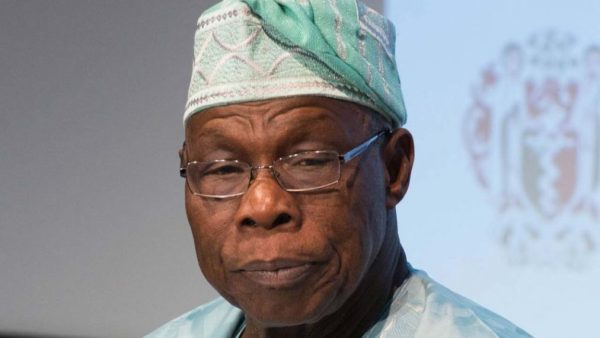
Former President Olusegun Obasanjo has revealed that he once rejected a proposal to make former Kaduna State Governor, Nasir El-Rufai, his successor, citing a lack of maturity at the time.
Obasanjo made the disclosure on Friday in Abeokuta, Ogun State, during the second edition of the annual Ajibosin Platform Symposium, themed “The Importance of Leadership in Governance.”

According to the former president, Osita Chidoka, who served as Minister of Aviation under President Goodluck Jonathan, had suggested El-Rufai for the top job while Obasanjo was preparing to leave office in 2007.
During Obasanjo’s tenure, El-Rufai served first as Director-General of the Bureau of Public Enterprises (BPE) and later as Minister of the Federal Capital Territory (FCT) between 2003 and 2007.
Recounting the conversation, Obasanjo said he dismissed the idea because he believed El-Rufai needed more time to develop politically and emotionally before assuming such a high office.
“Let him tell you,” Obasanjo teased Chidoka during the event. “He didn’t mention that he was pushing for his friend, El-Rufai, to succeed me. Is that not true?” he asked, as Chidoka nodded in confirmation.
Obasanjo continued, “I did not yield to the pressure. Later, he asked me why I didn’t agree. I told him El-Rufai needed to mature. Years later, when he saw El-Rufai’s performance, he came back and said, ‘You were right, El-Rufai needed to mature.’”
The former president, however, praised both Chidoka and El-Rufai, along with other members of his former team, describing them as individuals with “special attributes” that contributed significantly to his administration’s achievements.
At the event, Chidoka also recalled how El-Rufai had recommended him to Obasanjo when he was 34 years old — a move that led to his appointment as Corps Marshal of the Federal Road Safety Corps (FRSC), marking the start of his rise in public service.
Obasanjo, who handed over power to the late President Umaru Musa Yar’Adua in 2007, said leadership choices require “balance between competence and maturity,” noting that both are essential qualities for governance.
