
By Ayodele Abere
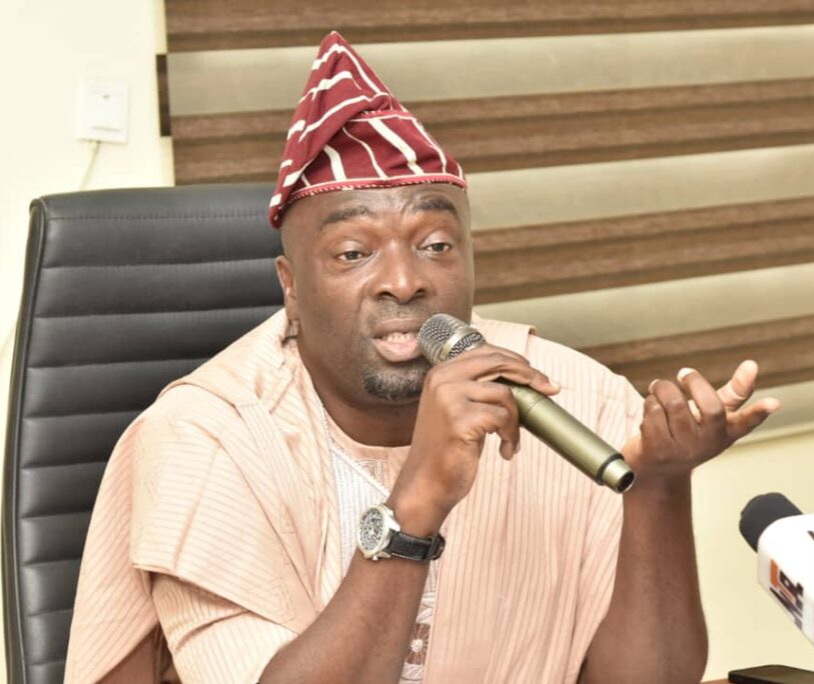
The Managing Director of the Federal Housing Authority (FHA), Hon. Oyetunde Ojo, has defended President Bola Tinubu’s administration, insisting that its economic reforms are gradually transforming Nigeria through improvements in infrastructure, security, healthcare and other critical sectors despite the challenges facing the country.

Ojo stated this while addressing online journalists at his residence in Ado-Ekiti on Tuesday, where he urged Nigerians to assess the Tinubu administration based on its policies, ongoing projects and achievements rather than expect immediate solutions to the country’s longstanding challenges.
The FHA boss, who said he had spent over two decades in Ekiti State politics, described politics as a profession that requires strategic planning, patience and commitment. He maintained that political success and national development do not happen overnight, stressing that leaders must understand the people and work consistently to achieve their objectives.
Speaking on the economic reforms of the Tinubu administration, Ojo said the removal of fuel subsidy had increased the financial resources available to state governments, enabling them to invest more in infrastructure and other developmental projects. He cited the increase in monthly allocations to states, including Ekiti, as one of the benefits of the policy, arguing that the additional revenue should translate into improved living conditions for Nigerians.
On infrastructure, he highlighted ongoing road construction across the country, particularly the development of concrete roads, which he said could last between 30 and 40 years. He also pointed to improvements in passport processing, noting that Nigerians could now obtain international passports more conveniently than in previous years.
Addressing insecurity, Ojo identified prompt responses to security threats as critical to reducing criminal activities. He expressed support for the establishment of state police, arguing that decentralised policing would strengthen intelligence gathering, improve emergency responses and reduce pressure on the Federal Police. He also referenced the establishment of military formations in Ekiti State as part of efforts to strengthen security in the region.
On healthcare and electricity, the FHA Managing Director highlighted what he described as improvements in access to medical services, particularly dialysis treatment, as well as increased investment in healthcare delivery. He also supported the decentralisation of electricity generation and distribution, arguing that states should have the opportunity to generate and distribute power to meet their local needs rather than depend entirely on the national grid.
Ojo, however, cautioned Nigerians against expecting immediate transformation, maintaining that the country needed sustained policies, strategic planning and patience to overcome challenges accumulated over several years. He urged citizens to examine the government’s interventions across different sectors and acknowledge the progress being made, insisting that the Tinubu administration was gradually laying the foundation for a better Nigeria.
