
By Ayodele Abere
AI’s integration into media operations has the potential to support journalists by automating repetitive tasks and uncovering patterns in complex data sets. However, as AI systems become more capable of generating realistic text, images, and even deepfake videos, they also pose significant threats to the credibility of journalism and the trustworthiness of public information.

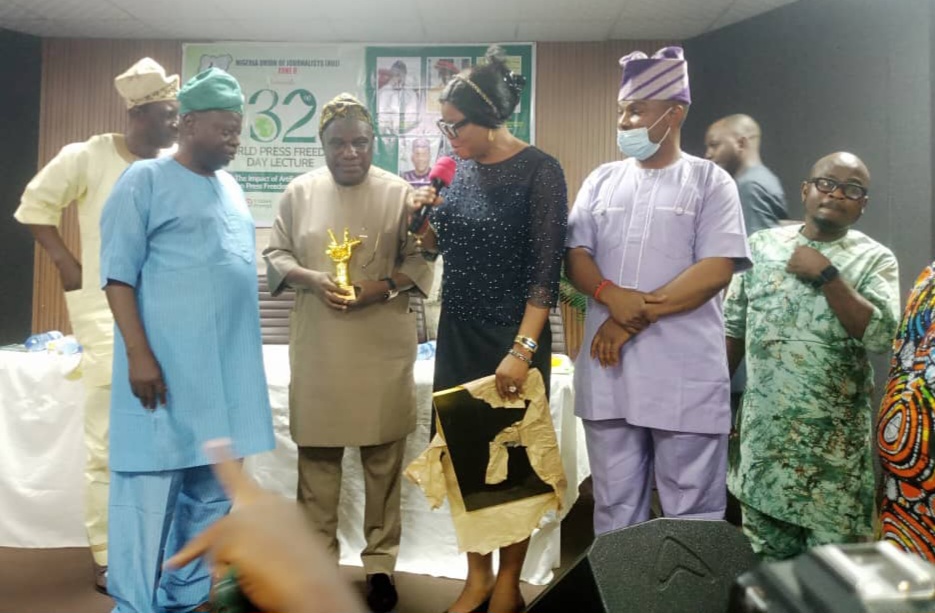
This was stated by the Senator representing Oyo North Senatorial District, Senator Buhari Abdulfatai recently while delivering a paper on the Impact of Artificial Intelligence on Press Freedom and Media in Ibadan, the Oyo State capital, to mark the 32nd World Press Freedom Day.
The Senator noted that these capabilities could be misused to spread disinformation, manipulate public opinion, and erode trust in traditional news sources, an outcome according to him, that directly threatens press freedom and democratic discourse.
The Guest Lecturer explained that the concentration of technological power in the hands of a few corporations, and the displacement of journalists by automated systems have prompted scholars and policymakers to question the ethical and legal implications of AI in journalism.
In his presentation, the Vice Chancellor, Ladoke Akintola University of Technology, Ogbomoso, Oyo State, Professor Rasaq Olatunde Rom Kalil, revealed that Artificial intelligence is reshaping the media in fundamental ways noting that It can empower journalism by making news production more efficient and information more accessible.
However, the VC opined that AI’s influence is not entirely positive, saying It can also be weaponized to manipulate truth, entrench bias, and suppress dissent with reference to (Chesney & Citron, 2019).
“Our goal should be to ensure that AI serves journalism, not replace or subvert it, but strengthens it. This requires thoughtful regulation, ethical innovation, and unwavering commitment to the values of a free and independent press.
Noting that ensuring press freedom in the AI era requires collaboration between various stakeholders, including journalists, technologists, ethicists, legal experts, and policymakers, the University Administrator said journalists should not navigate the AI landscape alone saying partnerships with technologists are essential to understanding tools they are using and to mitigate the risks of automation and bias.
The Don emphasized the need to have Legal experts to help develop frameworks that govern AI usage in the media while protecting press freedom and privacy rights. “Collaboration between these sectors can lead to the creation of comprehensive policies that foster transparency, accountability, and fairness in AI tools used by media outlets”.
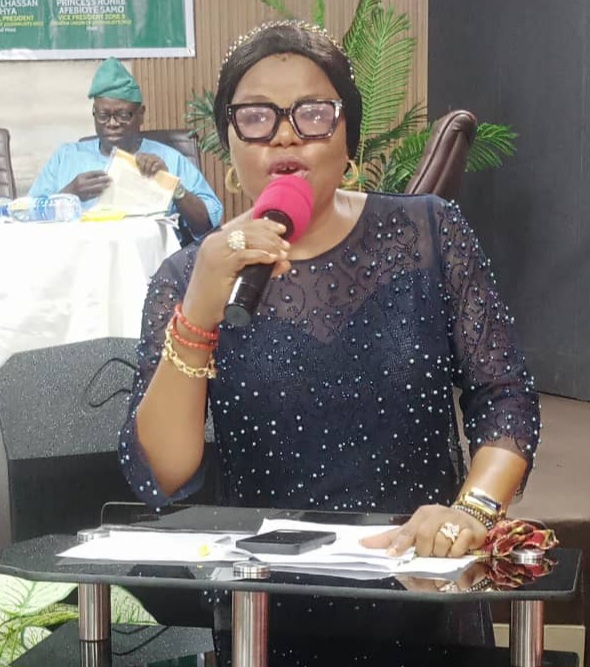
In her address, the Vice President, NUJ Zone “B”, Princess Ronke Afebioye-Samo, remarked that the essence of the gathering was to reflect on the evolving media terrain and re-affirm the vital role of ethical journalism to safeguard truth and democracy, to explore the growing impact of Artificial Intelligence on Journalism, Media operators and Press freedom, the rise of misinformation and the ethical hazards faced by media professionals.
The VP noted that despite the challenges being faced by journalists in Nigeria, the NUJ remains committed to upholding principles of ethical journalism and promoting high standards of professionalism.
Describing WPFD as a unique celebration that is reminding everyone to protect and support the media, she said without a “free Press, there can’t be a free society”.
The Vice President pointed out that the occasion was a wake up call to all concerned that, it is important for journalists to speak freely and be safe always.
