
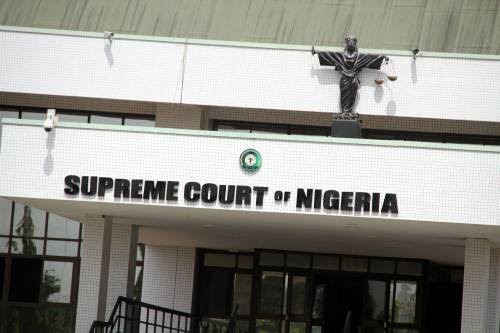
The Supreme Court has criticised the Federal Government for failing to implement its July 2024 judgment ordering the direct release of local government allocations from the federation account.
According to the apex court, there was no convincing proof that the Attorney-General of the Federation (AGF) had taken the required steps to activate the modalities needed for full compliance with its earlier ruling in the case between the AGF and the Attorney-General of Abia State and others.

Delivering the lead judgment, Justice Mohammed Idris directed the authorities to commence immediate implementation of the subsisting decision compelling direct funding of the nation’s 774 local government councils.
He made the pronouncement in a suit filed by the Osun State Government, which sought an order compelling the AGF to release withheld allocations belonging to the state’s local governments. The court, however, struck out the suit.
In its six-to-one majority decision, the Supreme Court held that the Attorney-General of Osun State lacked the legal capacity to sue on behalf of the councils, noting that local governments are constitutionally recognised entities that can sue and be sued.
Justice Idris, in the judgment marked SC/CV/773/2025, upheld parts of the AGF’s preliminary objection, ruling that the Osun AG failed to demonstrate any valid cause of action capable of invoking the court’s original jurisdiction under Section 232(1) of the Constitution.
He explained that the dispute centred on the alleged refusal of the Federal Government to release Osun LG allocations and not on any constitutional conflict between Osun State and the Federation, hence the state AG lacked locus standi without authorisation from the concerned councils.
The court further clarified that the case differed from the landmark AGF vs AG Abia judgment, which directly addressed the autonomy of local governments and the abuse of their allocations by state governments.
By constitutional provision, Justice Idris noted, local governments are a separate tier of government with full juristic capacity, and funds standing to their credit belong exclusively to them and must be controlled by their democratically elected officials.
According to him, neither the FG nor state governments have authority to tamper with, jointly own, or manage local government allocations outside constitutional provisions and court orders.
He faulted the AGF’s claim that Osun State was in contempt of the July 2024 judgment, insisting that it was actually the Federal Government that had yet to fulfil its duty to operationalise direct funding of the councils.
The court reminded the Federal Government that the creation of dedicated accounts for the 774 LGAs and other administrative steps fall under the responsibilities of federal agencies and must be completed without delay.
Justice Idris emphasised that failure of the FG to obey the subsisting judgment amounts to a breach of the rule of law, adding that the AGF “cannot approach the fountain of justice with unclean hands.”
He reaffirmed that the July 2024 Supreme Court judgment remains binding and that all outstanding allocations must be released directly and in full to local government councils across the country.
Another member of the panel, Justice Emmanuel Agim, delivered the lone dissenting judgment, disagreeing with the majority and insisting that the Osun AG had the right to bring the suit. He held that a valid dispute existed between Osun State and the Federation regarding withheld local government allocations.
In the 2024 landmark ruling, the Supreme Court ordered direct payment of LG funds and barred governors from dissolving democratically elected local government councils or operating caretaker committees.
