
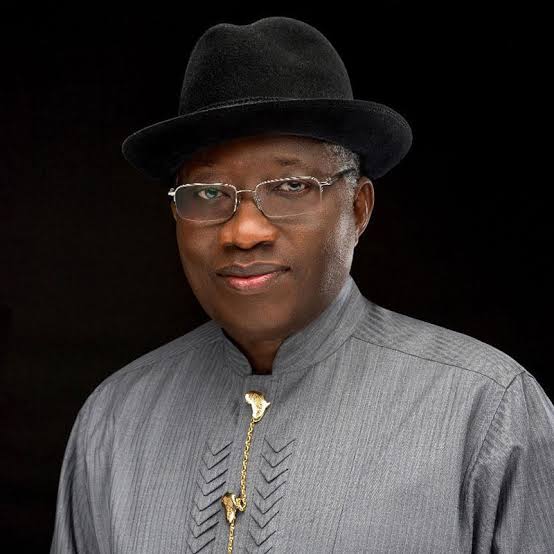
Former President Goodluck Jonathan has disclosed that late President Umaru Musa Yar’Adua did sign a letter authorising him to act as president during his prolonged medical absence — but the letter was never presented to the National Assembly.
Jonathan, who served as vice-president at the time, made the revelation during an interview with the Rainbow Book Club while reflecting on his memoir, My Transition Hours.

He described that period as one of the most turbulent moments in Nigeria’s democratic journey, characterised by political uncertainty, ethnic and religious divisions, and a looming constitutional crisis.
According to Jonathan, Yar’Adua’s failure to formally transmit power when he travelled for medical treatment in 2009 created a vacuum at the top level of government, leaving the country in a fragile state.
He explained that while the letter empowering him to act as president was written, it was never submitted by the official it was handed over to. “That letter was written. But the person who the letter was handed over to — I will not mention the name — refused to submit it to the National Assembly. Yar’Adua became so ill that he had no control of issues,” Jonathan said.
He noted that the situation was further complicated by the delicate political arrangement in place at the time, which saw power shift from a southern Christian, Chief Olusegun Obasanjo, to a northern Muslim, Yar’Adua — with an unspoken agreement for the north to hold power for eight years before rotating back.
“But the health issue came up, and that was the problem. And that is why even to allow me to act was an issue,” Jonathan added.
Doctrine of Necessity Was Nigeria’s Lifeline
Recalling the events leading to his eventual recognition as acting president, Jonathan said he was limited in his capacity to govern fully since there was no official transfer of power.
“The president of Nigeria has two main responsibilities. First, you are the chief executive — that the vice-president can assume. But there was no commander-in-chief. You are either commander-in-chief or you are not,” he explained.
He said the National Assembly eventually invoked the doctrine of necessity, a constitutional interpretation that allowed him to assume full presidential powers and save the country from a governance crisis.
“The country was tense. Under this north-south divide, Christian-Muslim divide, it was really tense. Every day I was hearing about coup,” he revealed.
‘I Chose to Remain in State House Despite Threats’
Jonathan also recalled how friends advised him to vacate the Presidential Villa for his safety during that period. But he stood his ground.
“I remember one day, I was still vice-president — they had not even moved the doctrine of necessity — and some of my friends came and said, ‘No, you don’t have to sleep here. You have to come and sleep in my guest house,’” he said.
“I said, ‘No.’ I will stay in the state house. If anybody wants to kill me, it’s better they kill me in the state house so Nigerians will know that they assassinated me in the state house. They know I have not committed any offence.
“If I go and stay in your guest house and people kill me there, they will now say Indian girls brought apple to kill me. And I wouldn’t want that kind of story.”
Despite mounting pressure and political intrigue, Jonathan said he remained calm and focused throughout the ordeal.
“To me, I was not bothered. Really, I was not bothered. And I was very calm. But that was the scenario,” he added.
