
By Samuel Sunday
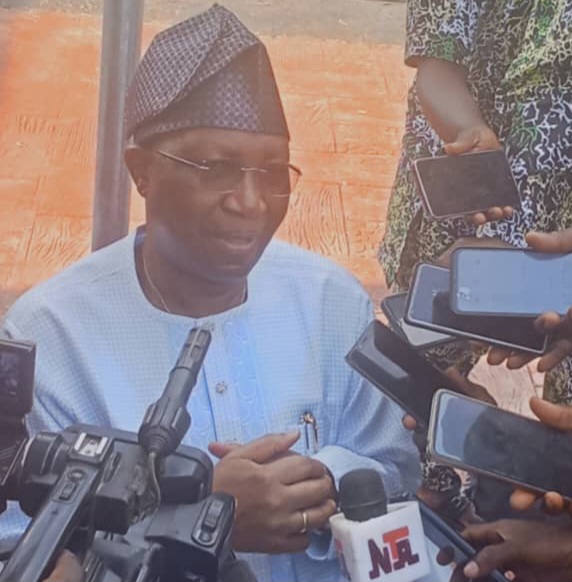
A legal icon and Senior Advocate of Nigeria (SAN), Chief Wole Olanipekun, has called for a national rebirth anchored on humanism, unity and truth

The foremost lawyer made the call on Saturday while interacting with newsmen at his country home, Ikere-Ekiti, Ekiti State
Warning that Nigeria cannot progress unless citizens stop waging war against their own country, reflected on life after age 70 saying
his commitment to philanthropy began from deep personal reflections on purpose, gratitude, and the need to uplift others.
He recounted that he expanded his scholarship schemes across the Southwest after witnessing how poverty continues to hold back many brilliant young Nigerians. “Can I wear two dresses at the same time? Can I eat beyond what my stomach can take? Why will I not impact others?” he asked.
He narrated how he discovered a young office assistant from Abia State who showed exceptional intelligence despite having no family support. The renowned philanthropist said he sponsored him through university and Nigerian Law School. Adding that the young man is now a practicing lawyer.
“These are the things that make life meaningful to me,” stressing that a life of greed and selfishness is empty.
The Senior Advocate of Nigeria expressed deep concern over rising intolerance, insecurity, and what he described as the wickedness of man to man in Nigeria. He insisted that the country urgently needs humanists, people who are thoughtful, humane, and committed to peace.
“Humanists will not wage war against their country,” he declared, questioning why Nigerians kill, hate, and sabotage one another over religious and ethnic differences.
Olanipekun noted that some individuals are deliberately undermining the nation’s security and progress. “There are Nigerians waging war against Nigeria, if we know them, let us reveal them,” he said.
He expressed sympathy for President Bola Ahmed Tinubu for inheriting longstanding problems
Reiterating his advocacy for regional federalism, the legal luminary said restructuring remains the most realistic path to national cohesion and development.
He argued that Nigeria’s six regions share cultural and linguistic ties that make regional governance both natural and effective. “When you have the regions, there will be cohesion,” he said.
He concluded by urging Nigerians to embrace compassion, truth, and collective responsibility, saying, “We must appreciate God, appreciate humanity, and stop this inhumanity of man to man.”
