
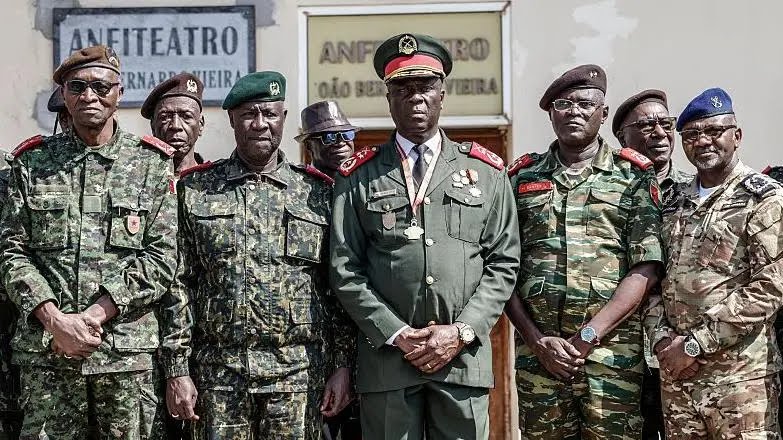
Guinea-Bissau’s military has appointed General Horta N’Tam as the country’s new leader for a one-year transition period, a day after soldiers seized power, arrested President Umaro Sissoco Embalo, and halted the announcement of election results.
Soldiers maintained heavy patrols around the presidential palace in Bissau on Thursday, with the streets largely subdued after the intense gunfire that rocked the area during Wednesday’s takeover.

General N’Tam, formerly the army’s chief of staff, was sworn in at the military headquarters in a ceremony witnessed by AFP journalists. Surrounded by heavily armed troops, he said the intervention was necessary to prevent “operations that aimed to threaten our democracy”.
The coup leaders had on Wednesday declared “total control” of the country and suspended the electoral process as citizens awaited the outcome of Sunday’s vote, which Embalo had been widely expected to win.
Despite his previous closeness to Embalo, N’Tam said the military had gathered “sufficient evidence” to justify its actions, calling for citizens’ cooperation as the country enters a new uncertain phase.
General Denis N’Canha, head of the presidential military office, earlier claimed the coup was triggered by a plot involving “drug lords”, alleging that weapons had been smuggled into the country to destabilise constitutional order.
Following the takeover, the military halted all media broadcasts, imposed a nationwide curfew, and closed all land, air, and sea borders. By Thursday, General Lassana Mansali announced that the borders had been reopened.
President Embalo remains in custody at the general-staff headquarters and is being “well-treated”, according to a military source.
Guinea-Bissau, positioned between Senegal and Guinea, has a long history of political instability, having witnessed four successful coups and multiple attempts since independence in 1974.
