
By Samuel Sunday
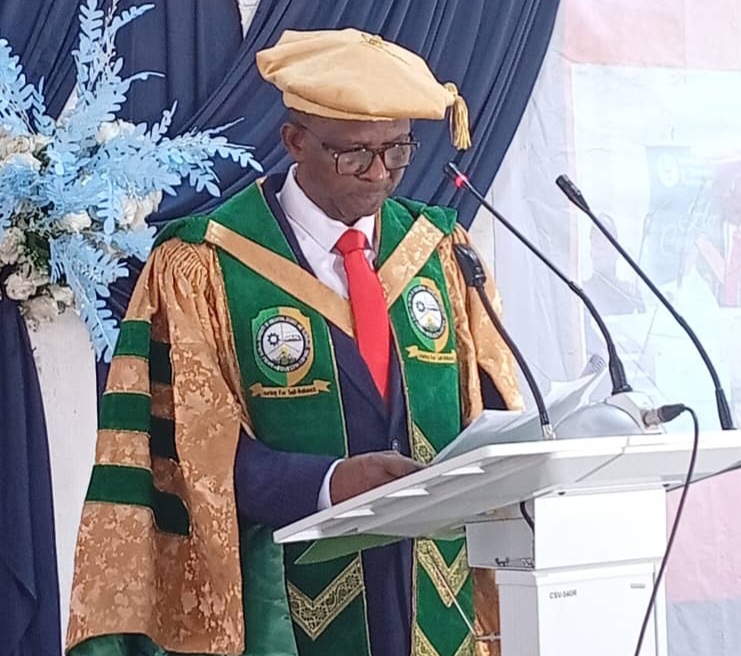
A Professor of Economics at the Bamidele Olumilua University of Education, Science and Technology, Ikere-Ekiti, BOUESTI, Ekiti state, Joseph Ojo Ekiran, has advocated the establishment of a Fiscal Responsibility and Sanity Commission,FRSC, by the Nigerian government.

Prof. Ekiran said the body if on stream will enforce real-time budget discipline, track fiscal irregularities, and publish reg-flag reports quarterly. According to him, the commission should be empowered with prosecutorial powers and a public-facing dashboard.
Let it be known from this lecture hall today that we must move from “Money Miss Road” to “Money Find Road.” It is time for a fiscal reset-a new paradigm where budgets are guided by evidence, policies by prudence, and expenditures by purpose. This is the kind of painful but necessary process that true development demands. He observed that current bodies such as the Budget Office and Fiscal Responsibility Commission lack enforcement mandate”.
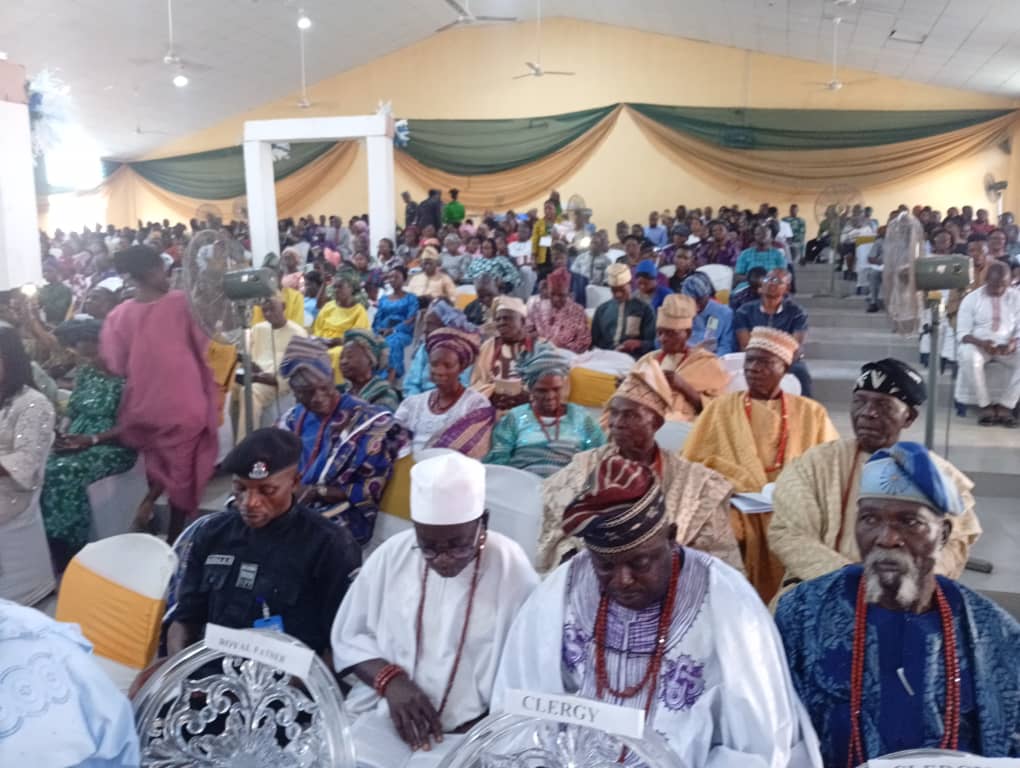
Delivering the 4th inaugural lecture of the institution, titled”, Money Miss Road ”, A paradigm Shift of Fiscal Insanity In Nigeria”, the don further recommended what he called the pathways to rescue the nation Nigeria from fiscal insanity and move toward national integrity and renewal as follows:
-Reinforcement of Fund Recovery Agencies:
Although agencies like the Economic and Financial Crimes Commission (EFCC) and the Independent Corrupt Practices and Other Related Offences Commission (ICPC) exist, the government must invest in their capacity-legally, financially, and technologically. Specialized units within these agencies should be created to track illicit financial flows, conduct forensic audits, and repatriate looted funds across borders.

- Asset Declaration and Lifestyle Audits:
Enforcing Section 11 of the Code of Conduct Bureau Act regarding mandatory asset declarations for public officials is critical. This should be complemented by lifestyle audits, which compare declared income with observable wealth.
Yoruba proverb also says:
“Otító ni ń gbé orílè-èdè l’èkè”.
Meaning: It is truth (or honesty) that upholds a nation in the forefront.
It aligns with the biblical principle (Proverbs 14:34): “Righteousness exalts a nation, but sin is a reproach to any people.” Thus, this proverb is often used in political, social, and leadership contexts to stress that good governance, justice, and truthfulness are what elevate a nation to greatness. Conversely, falsehood, corruption, and dishonesty lead to downfall, instability, and shame.
-International Cooperation and Mutual Legal:
The government must strengthen bilateral and multilateral arrangements through instruments like: The United Nations Convention Against Corruption (UNCAC), the African Union Convention on Preventing and Combating Corruption and the Stolen Asset Recovery (STAR) Initiative. For instances: #322 million Abacha loot was repatriated from Switzerland in 2018. #4.2 billion Ibori loot was repatriated from the UK in 2021. Yet, many such recoveries remain secretive – indicating the urgent need for transparent repatriation processes in the country.
- Whistleblower Protection and Incentive Framework:
The Whistleblower Policy (launched in 2016) helped uncover over #600 billion in hidden assets and cash:However, reports of unfulfilled rewards and retaliatory actions against whistleblowers have dampened its impact. The government must legalize and institutionalize the 2016 whistleblower policy with: confidentiality, compensation timelines and legal aid for whistleblowers.
-Consolidation and Digitization of all Government Revenue Collection:
Merge all revenue-generating agencies under a Single Treasury Revenue Portal (STRP), using blockchain to prevent tampering with financial records and enabled audit trails. The step will prevent “leakages” from ghost accounts and informal payment networks. The priority areas shall include: procurement, payroll, tax collection, passport and license issuance.
- Mandatory Forensic Audit of Ministries, Departments and Agencies:
Make forensic audit of Ministries, Departments, and Agencies (MDAs) compulsory, not discretionary. The forensic audit should be conducted jointly by the Auditor-General’s Office and external certified auditors. For instance, 2016 audit report revealed unremitted revenues totaling #450 billion from 265 agencies. This shows the scale of leakages requiring systematic auditing and prosecution.
-Integration of Artificial Intelligence in Budget Monitoring:
Artificial intelligence can significantly enhance transparency and accountability in Nigeria’s fiscal management. By deploying Al-powered systems, budget implementation can be tracked in real time, discrepancies Predictive analytics can also forecast potential risks, such can be flagged instantly, and leakages detected early. decision-making. This integration reduces human errors, as cost overruns or revenue shortfalls, enabling proactive curtails corruption, and ensures that scarce resources are allocated efficiently toward national priorities.
-Establishment of Special Fiscal Courts:
Creating a dedicated fiscal court will ensure speedy trial and resolution of cases related to budget fraud, misappropriation of public funds, and financial crimes. Unlike regular courts burdened with diverse cases, a fiscal court will provide specialized judges and structures to enforce accountability, deter corruption, and strengthen fiscal discipline.
-National Fiscal Integrity Curriculum in Schools:
This recommendation advocates incorporating fiscal responsibility, transparency, and accountability principles into school curricula at all levels. By teaching students the value of prudent resource management, budgeting skills, and the dangers of corruption and waste, Nigeria can nurture a generation that understands and upholds fiscal discipline. Early education in fiscal integrity will help build a culture of accountability that can break the cycle of “money miss road” and foster long-term national development.
-Legislation of full Transparency and Citizen Feedback Portals:
Government should develop a Recovered Funds Dashboard, to be updated monthly and managed by the Budget Office or Ministry of Finance. The dashboard should highlight the total funds recovered, their sources, the projects financed from these recoveries, and the beneficiaries impacted. Yoruba proverb says:
“Bí a bá n jeun léyìn ògiri, ká mò pé ọjó kan, ògiri yóò tu.”
Meaning: If you eat behind the wall, one day the wall will collapse. It warns against secrecy in public expenditure and promotes transparency.
-Redirecting Recovered Funds to National Transformation:
Recovering money is only the first step. The true transformation comes when recovered funds are redirected transparently to impactful and sustainable development. Recovered money should be invested in capital projects that benefit the majority.
He cited the fiscal trajectories of China, Malaysia, and South Korea which according to him show that economic transformation is not an accident – it is the product of deliberate, disciplined, and development-focused fiscal policy. Nigeria’s contrasting experience under the “Money Miss Road” syndrome underscores the urgent need for a paradigm shift from revenue consumption to revenue investment.
As Yoruba wisdom counsels:
“Bi a ba ran ni nise eru, a fi ti omo je.”
Meaning: If entrusted with another’s property, one must treat it as one’s own. In the same way, public officials must treat the nation’s resources as a sacred trust, channeling them toward infrastructure, industrial growth, human capital development, and social welfare rather than recurrent wastage. At least 40% of annual budgets should be committed to finance capital projects in Nigeria.
Meaning: Money can buy habits, but it cannot buy integrity.
To to him, without integrity in fiscal management, even the richest nation will live like the poor. Therefore, let this lecture be more than an academic reflection; let it be a clarion call to fiscal rebirth. Let us resolve that never again will Nigeria’s money miss road. Instead, it will find its way back to classrooms, hospitals, roads and industries, for the economic welfare of all of us in the country.
