
By Samuel Sunday

The Resident Electoral Commissioner (REC) of the Independent National Electoral Commission (INEC) in Ekiti State, Dr Bunmi Omoseyindemi, has assured stakeholders of the Commission’s commitment to conducting free, fair, credible, inclusive and transparent general elections in 2027.


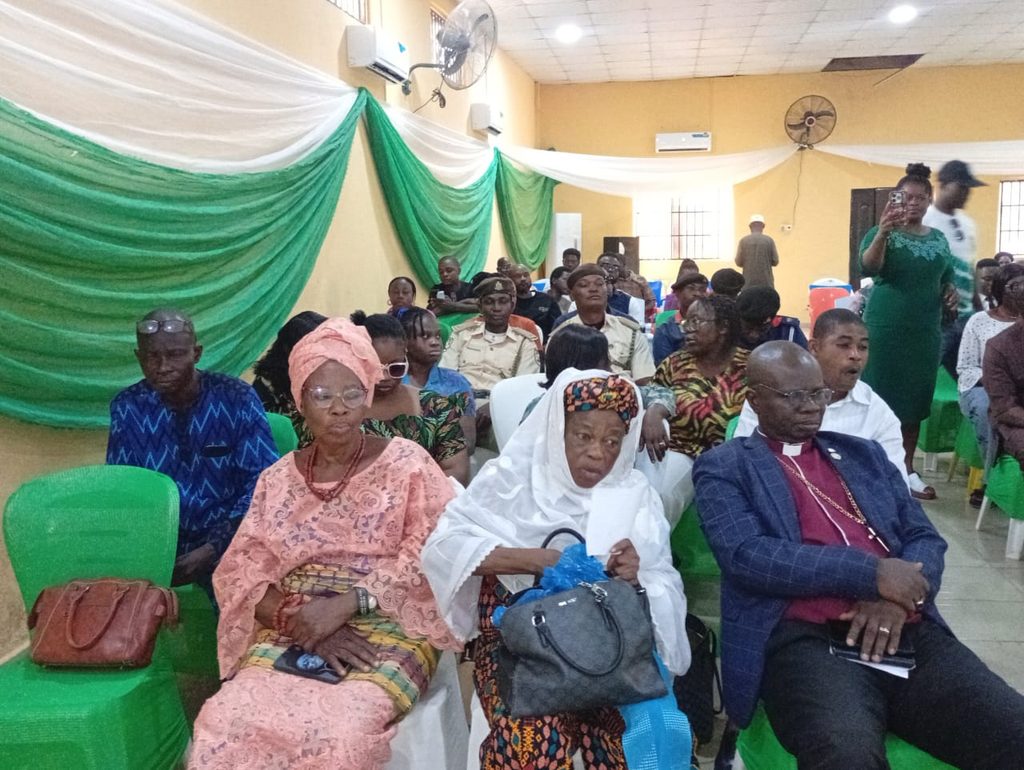
Dr Omoseyindemi gave the assurance at a stakeholders’ meeting in Ado-Ekiti convened to discuss the level of preparation for the 2027 General Election.
He said credible elections are not the responsibility of INEC alone but a shared national responsibility requiring the cooperation and commitment of all stakeholders.
“The 2027 General Election is an important national assignment, and INEC is conscious of the enormous responsibility placed on the Commission. Consequently, our preparations have been deliberate, comprehensive and proactive rather than reactive,” he said.
The REC disclosed that preparations in Ekiti State are being approached through seven critical operational areas: voter registration and voters’ register; election personnel and capacity building; election logistics and operational planning; election technology and electoral processes; election risk management and security; stakeholder engagement and voter education; and inclusion and participation.
On voter registration, the REC said the Commission is working to ensure eligible citizens have the opportunity to register, update their records and collect their Permanent Voter Cards (PVCs), while also ensuring that the voters’ register is accurate, credible and free from avoidable errors and multiple registrations.

On personnel, Dr Omoseyindemi said INEC is strengthening the capacity of its permanent and ad hoc staff through training and retraining, with particular attention to Electoral Officers, Assistant Electoral Officers, Electoral Operations personnel, Registration Area Centre Managers, Supervisory Presiding Officers and Presiding Officers.
He added that the objective is to ensure that every election official understands his or her responsibilities and operates in accordance with established guidelines.
On logistics, the Commissioner said the Commission is reviewing its requirements, including vehicles, motorcycles, generators, communication facilities, election materials, storage arrangements and deployment of personnel across the 16 Local Government Areas and 177 Registration Areas in the state, with the aim of identifying gaps early and ensuring timely deployment on Election Day.
On technology, he explained that INEC will continue to strengthen the capacity of personnel to deploy and operate the Bimodal Voter Accreditation System (BVAS) and other approved technological applications, noting that adequate preparation, testing and training are essential to minimise technical difficulties during accreditation, result management and other electoral operations.
On security, Dr Omoseyindemi said through the Inter-Agency Consultative Committee on Election Security (ICCES), the Commission will continually identify, assess and develop appropriate responses to potential threats.
He listed political violence, thuggery, vote buying, intimidation, hate speech, misinformation and disinformation as activities capable of disrupting the electoral process, and urged security agencies to sustain cooperation with INEC and ensure adequate intelligence gathering, early warning, prevention and response mechanisms.
On stakeholder engagement, he said public confidence in the electoral process depends largely on effective communication and sustained engagement, calling on political parties, traditional institutions, religious organisations, civil society groups, the media and community leaders to work with INEC to promote voter awareness, peaceful participation and respect for electoral laws.
On inclusion, the REC reaffirmed the Commission’s commitment to ensuring that women, youths, persons with disabilities and other vulnerable groups are not excluded from the electoral process.
“I wish to emphasise that INEC cannot achieve credible elections in isolation. The responsibility is collective. Political parties must conduct their activities within the ambit of the law; security agencies must remain professional and impartial; the media must uphold accuracy and responsible reporting; and citizens must participate peacefully and responsibly,” he said.
Dr Omoseyindemi added that the credibility of an election is not determined only on Election Day, but is built through adequate preparation, effective collaboration and public confidence long before the first ballot is cast.
He reiterated that INEC remains committed to upholding the principles of impartiality, accountability and professionalism in the discharge of its constitutional responsibilities.
Also speaking at the meeting, the Director of the National Orientation Agency (NOA) in Ekiti State, Mrs Olubunmi Akomolede, called for massive participation of the people in the electoral process and peaceful conduct before, during and after the election.
She urged residents to register, collect their PVCs and come out to vote, while shunning violence, vote buying and other electoral malpractices capable of undermining the credibility of the polls.
In his remarks, the Ekiti State Commissioner of Police, Mr Michael Falade, assured of adequate security before, during and after the election, and called on political actors and their supporters to conduct themselves peacefully and obey electoral laws.
Other speakers at the meeting also called for active participation of the masses and peaceful conduct of the election, stressing that a credible poll requires the collective commitment of all stakeholders.
The meeting was attended by representatives of political parties, security agencies, civil society organisations, faith-based organisations, the media, youth and women’s groups, development partners and other critical stakeholders.
