
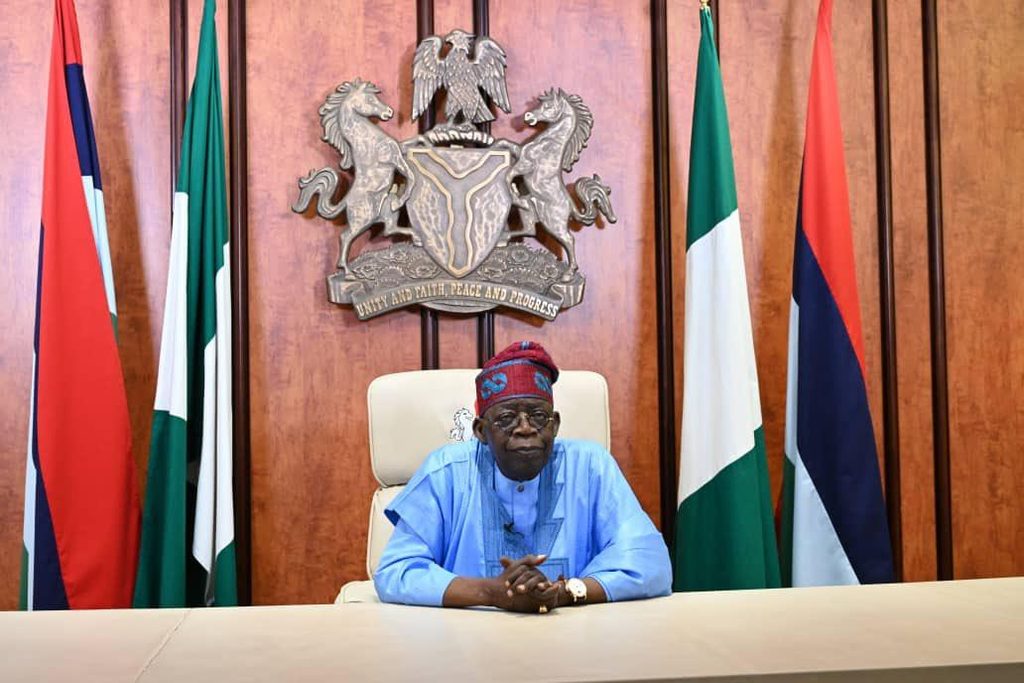
President Bola Tinubu has received a seven-volume document containing the proposed 2027 budget of the United Nations, following Nigeria’s role in the organisation’s budgetary and administrative process.
Nigeria’s Permanent Representative to the UN, Jimoh Ibrahim, presented the document to the President at the State House in Abuja.

Speaking to journalists after the presentation, Ibrahim described the event as a historic milestone, claiming that it was the first time in 66 years that a Nigerian president had received the proposed UN budget through the process.
He explained that the document was submitted to him in his capacity as chairman of the UN committee responsible for budgetary and administrative matters, known as the Fifth Committee.
“This is the presentation of the United Nations proposed budget for 2027 that was presented to me by the General Assembly, by the Secretary-General of the United Nations to the Fifth Committee, and that budget has seven volumes,” Ibrahim said.
He added that bringing the document to Nigeria was appropriate because the country is a member of the international organisation and participates in discussions on its budget.
“So it has to be presented to my country because my country is a member of the United Nations. I share the budget at the committee, so the appropriate thing to do is to bring the budget home and deliver it to the President,” he said.
Ibrahim reiterated his claim that the presentation marked an unprecedented development in Nigeria’s engagement with the UN budget process.
“This is the first time in 66 years that Nigeria will share budget in the committee. The first time. So I don’t know when we’re going to do that again in history,” he said.
The diplomat also praised Tinubu for receiving the document, describing the occasion as significant for Nigeria’s participation in the affairs of the global body.
“President Bola Tinubu is making history to have been able to receive that budget, being the first President in 66 years that will receive such budget from the United Nations, and it’s not a small issue for a country to receive the whole UN budget,” Ibrahim added.
According to the figures he provided, the proposed budget covers the UN’s regular activities and peacekeeping operations, with approximately $3.4bn earmarked for the regular budget and $8.5bn for peacekeeping.
However, those two figures add up to $11.9bn, below the approximately $14bn total Ibrahim cited. The discrepancy requires clarification.
He emphasised that the document remained a proposal and that the figures could change before the UN member states give final approval.
“The budget still has to be approved. This is a proposed budget. It’s at the proposed stage. You submit it to your country, and thereafter the budget is finally discussed. Figures are adjusted, and then finally the final budget is approved and spending commences,” he said.
When asked what Nigeria stood to gain from the proposed budget, Ibrahim said discussions were still ongoing and declined to identify specific benefits the country might receive.
He also referred to the construction of a $267m UN conference centre in Kenya as an example of investment in facilities within a member state.
The proposed 2027 budget will undergo further examination and possible adjustments before UN member states approve the final figures and authorise spending.
