
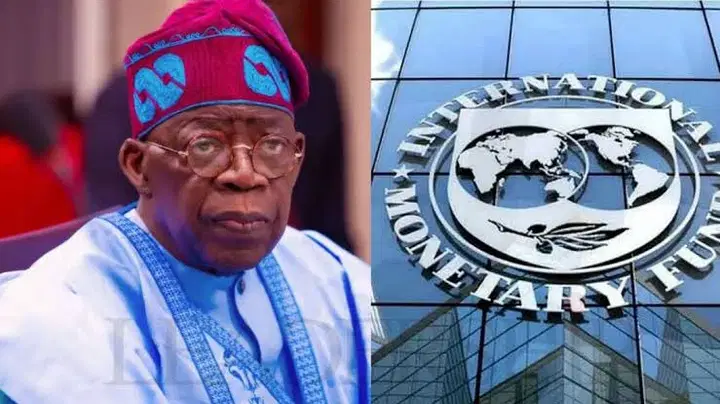
The International Monetary Fund (IMF) has advised the Federal Government against restoring a general petrol subsidy, urging it to provide targeted financial support to vulnerable households struggling with rising energy costs.
The fund said broad fuel subsidies were expensive, often benefited higher-income consumers disproportionately and could increase pressure on public finances at a time when borrowing costs were rising.

Rodrigo Valdés, director of the IMF’s Fiscal Affairs Department, gave the advice on Wednesday during a press briefing on the fund’s Fiscal Monitor at the 2026 annual meetings of the IMF and World Bank in Bangkok, Thailand.
Valdés was responding to a question about the impact of higher energy prices on Nigeria, where rising petrol costs can increase transport fares, push up inflation and worsen poverty. The question also referred to calls for the government to restore petrol subsidies ahead of the 2027 general elections.
“Protecting people is not the same as protecting the price of fuels,” Valdés said.
He explained that fuel subsidies and other measures that prevent domestic prices from adjusting fully to energy shocks had cost countries between one and 1.5 per cent of gross domestic product in 2026.
According to him, such policies place a heavy burden on government finances and may not adequately support those who need assistance most.
“It’s first fiscally very costly, and second, if you look at the pattern of consumption, it’s easy to see that that subsidy is readily regressive in many places,” he said.
The IMF official urged governments to use social safety nets and household data to identify vulnerable people and provide assistance directly to them.
“There are better tools to deal with this,” he said.
Rather than keeping petrol prices artificially low for everyone, the fund’s position is that governments should direct relief to households most affected by rising energy costs. Such measures could include targeted cash transfers and other forms of social assistance, depending on the needs of the population.
In Nigeria, higher petrol prices have continued to raise concerns over transport costs, food prices and the cost of living. The effects are particularly difficult for low-income households, whose earnings often leave them with limited room to absorb increases in essential expenses.
The Federal Government recently announced a 30-day petrol discount at Nigerian National Petroleum Company Limited retail stations as part of efforts to ease the burden of rising fuel prices. Public transport operators were given priority under the initiative.
The IMF’s advice comes amid continuing debate over how the government can protect households from the effects of high energy costs without placing additional pressure on public finances.
The central challenge for policymakers is how to provide effective relief to vulnerable Nigerians while maintaining fiscal stability.
