
By Ayodele Abere
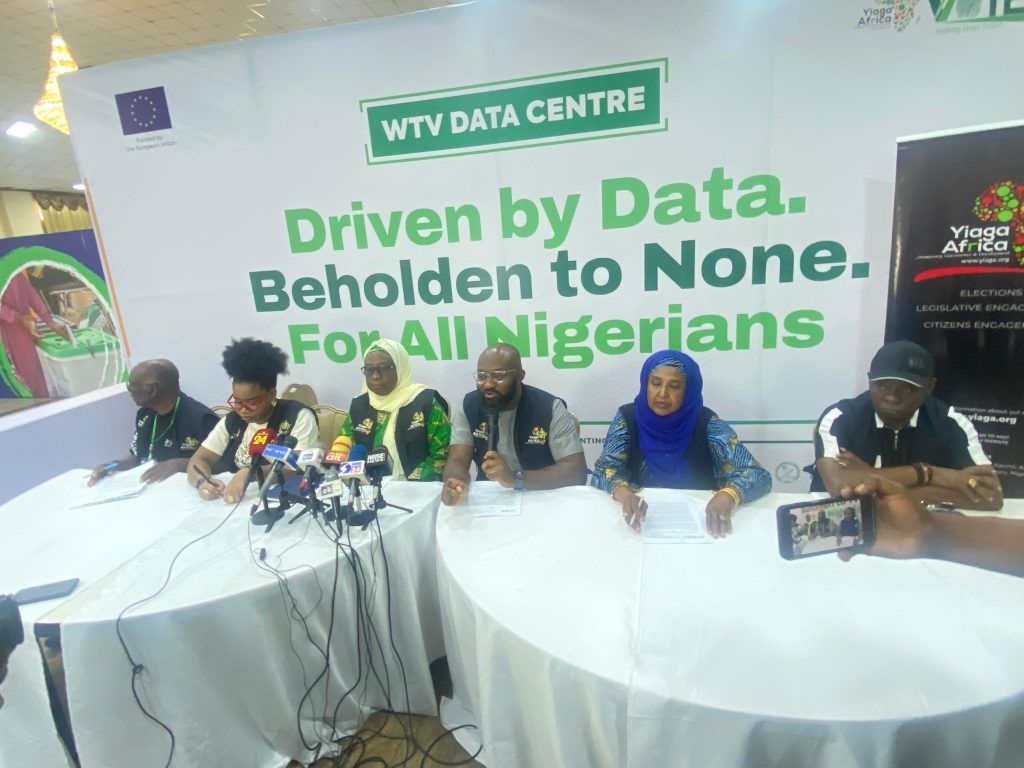
Yiaga Africa has described Saturday’s June 20, 2026 governorship election in Ekiti State as a “critical test of preparedness, transparency, and trust” under Nigeria’s Electoral Act 2026.

In a pre-election assessment released ahead of the poll, Yiaga Africa said the election will be the first governorship poll conducted under the Electoral Act 2026. It will test the implementation of key provisions, including electronic transmission of results, administrative review, and results collation, as well as INEC’s new e-EC8A validation process.
The Chairperson of the 2026 Ekiti Election Mission, Dr. Aisha Abdullahi, said according to the Independent National Electoral Commission, INEC, the election will hold across 2,445 polling units in Ekiti’s 16 Local Government Areas, with 1,059,360 registered voters. INEC reports a Permanent Voter Card, PVC, collection rate of 97.1%.
Yiaga Africa noted that none of the 13 political parties fielded a female candidate and no candidate publicly identifies as a person with disability, raising concerns about exclusion in political recruitment.
The organisation said the Ekiti poll, coming seven months before the 2027 general election and two months before the Osun off-cycle governorship election, will shape public perception of INEC’s readiness and test voter confidence in a process many perceive as a foregone conclusion.
Yiaga Africa acknowledged INEC’s stakeholder engagements, training of officials, mock accreditation, and logistics arrangements despite delayed funding. However, mock accreditation revealed gaps in implementing provisions of the Electoral Act 2026 and the Regulations and Guidelines for the Conduct of Elections, 2026.
Yiaga urged INEC to ensure timely deployment of materials and personnel, effective activation of Registration Area Centres, RACs, proper use of the Bimodal Voter Accreditation System, BVAS, and transparent management and transmission of election results.
The organisation recognised the Inter-Agency Consultative Committee on Election Security, ICCES, for coordinating security plans. While the environment remains relatively calm, Yiaga noted lingering concerns in hotspot LGAs, including Ado-Ekiti, Ikole, Oye, and Ikere. It also flagged safety risks for the movement of voters, officials, and materials during collation in Ilejemeje and Moba LGAs due to recent kidnapping incidents, especially after 7:00 p.m.
Yiaga identified vote buying as a major threat, driven by economic hardship. It warned that inducement with cash and material gifts could distort the free expression of voters’ will and undermine confidence in the outcome.
The perception that the outcome is predetermined poses a risk of apathy and low turnout, despite high civic awareness among women, youth, and persons with disabilities.
Yiaga Africa outlined three benchmarks:
Preparedness Test: Timely deployment of personnel and materials, functional electoral technology, and officials’ readiness.
Transparency Test: Consistent use of BVAS, proper validation of polling unit results through e-EC8A, prompt transmission to the INEC Result Viewing Portal, IReV, and transparent collation.
Neutrality Test: Security agencies must secure voters, officials, and materials without partisan interference or excessive use of force.
Yiaga Africa is deploying its “Watching The Vote, WTV” methodology under the EU Support to Democratic Governance in Nigeria Phase Two programme. It will deploy 250 stationary observers to a representative random sample of polling units and 22 mobile observers across all 16 LGAs.
Yiaga urged INEC to sustain transparency in deployment, RAC activation, BVAS accreditation, and results transmission. It called on security agencies to maintain neutrality and guarantee the safety of voters, observers, journalists, electoral personnel, party agents, and election materials throughout voting, counting, transmission, and collation.
The CSO also urged INEC, security agencies, and anti-corruption bodies to arrest and prosecute vote buyers on Election Day. It further called on political parties and candidates to publicly renounce vote buying, and urged voters to reject inducement. Yiaga added that voter education and mobilisation should be intensified, with deliberate outreach to women, youth, persons with disabilities, and rural communities.
