
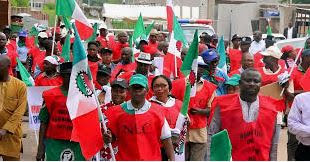
The Nigeria Labour Congress (NLC) and Trade Union Congress (TUC) on Thursday, tabled a 20-point demand before the Federal Government as part of activities marking the 2025 Workers’ Day celebrations held at the Eagles Square, Abuja, and across the country.
The NLC President, Comrade Joe Ajaero, who presented the demands, called for improved welfare and protection of Nigerian workers. He jointly signed the speech with his TUC counterpart, Comrade Festus Osifo.

Among the major demands were immediate salary adjustments to reflect the current economic situation, tax reforms, pension upgrades, and reversal of policies that workers say have worsened public welfare.
Ajaero called for a uniform retirement age of 65 years or 40 years of service across all civil service sectors, not just for teachers, judges, and health workers. He argued that public servants deserve equal treatment, especially after years of dedicated service.
The labour centres also demanded a reversal of the state of emergency declared in Rivers State, describing it as unconstitutional and harmful to democratic processes.
They called for transparency in the Pay-As-You-Earn (PAYE) tax system and urged the Federal Government to halt the proposed tax bills currently before the National Assembly, insisting workers must be involved in all tax policy discussions.
On economic matters, the unions requested a reduction in telecom tariffs from 50% to 35%, restoration of gratuity payments, and the establishment of a national minimum pension with automatic inflation-based adjustments.
Labour further condemned the ongoing deregistration and fragmentation of unions, warning that it undermines unity and weakens workers’ voices.
The NLC and TUC also reiterated their opposition to the electricity sector privatisation, claiming it has failed to deliver improved services while increasing hardship for the masses. They urged the government to review and consider reversing the privatisation exercise.
They expressed grave concern over the worsening security situation nationwide, describing the killings in some parts of the country as genocidal. The labour leaders demanded urgent measures to ensure the safety of workers and citizens alike.
On governance, they called for democratic accountability, electoral reforms, and the expansion of civic space, insisting that actions that suppress dissent and undermine democracy must stop.
They also condemned the harsh and humiliating verification exercises imposed on retirees and demanded a more humane system that upholds the dignity of pensioners.
In conclusion, organised labour reaffirmed its commitment to fighting for justice, fair wages, and a dignified life for all Nigerian workers. They urged the government to treat workers as partners in nation-building and not as enemies.
The unions said they remain open to dialogue but warned that workers’ patience is wearing thin in the face of worsening economic conditions.
