
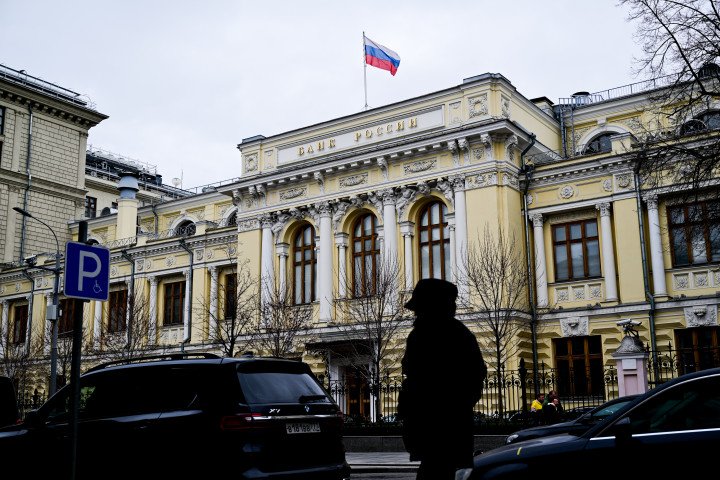
The Bank of Russia has cited “unfavorable weather conditions” and recent tax adjustments as factors contributing to a slowdown in economic activity, as GDP growth decelerated sharply in the third quarter.
According to the Economic Development Ministry, year-on-year GDP growth fell to 0.6% in July-September, down from 1.1% in the second quarter, 1.4% in the first, and 4.5% in the final quarter of 2024.

The Central Bank said a “temporary surge in production in certain sectors” late last year created a strong base effect that influenced its decision to downgrade forecasts. It now expects fourth-quarter GDP to range between a 0.5% contraction and 0.5% growth, compared with its July projection of 0–1% growth.
A quarterly contraction would mark Russia’s first year-on-year GDP decline since Q1 2023, when the economy shrank by 1.6%. The third-quarter result also came in well below the Bank’s August forecast of 1.6% growth.
While the Bank said the economy’s “overheating” is easing, it warned that labor market strain, inflation persistently above 4%, and model projections indicate overheating could last into the first half of 2026. As a result, it signaled that high interest rates would remain in place for an extended period.
“The economy hasn’t cooled — it’s frozen,” said Anton Tabakh, chief economist at Expert RA. “Many sectors are already chattering their teeth”.
The Central Bank noted uneven sector performance. Output has declined in export-oriented industries such as mining and ferrous metallurgy, while domestic-focused sectors have continued to grow, though at varying rates. Defense-related industries remain the main growth driver, with most civilian sectors in decline.
Separately, the Bank has previously flagged weather as an inflationary risk. A chilly start to summer in western Russia was projected to drive up food prices, potentially creating knock-on effects across the economy.
The regulator continues to target 4% inflation but does not expect to reach that level until 2026, projecting average inflation of 7–8% in 2025.
