
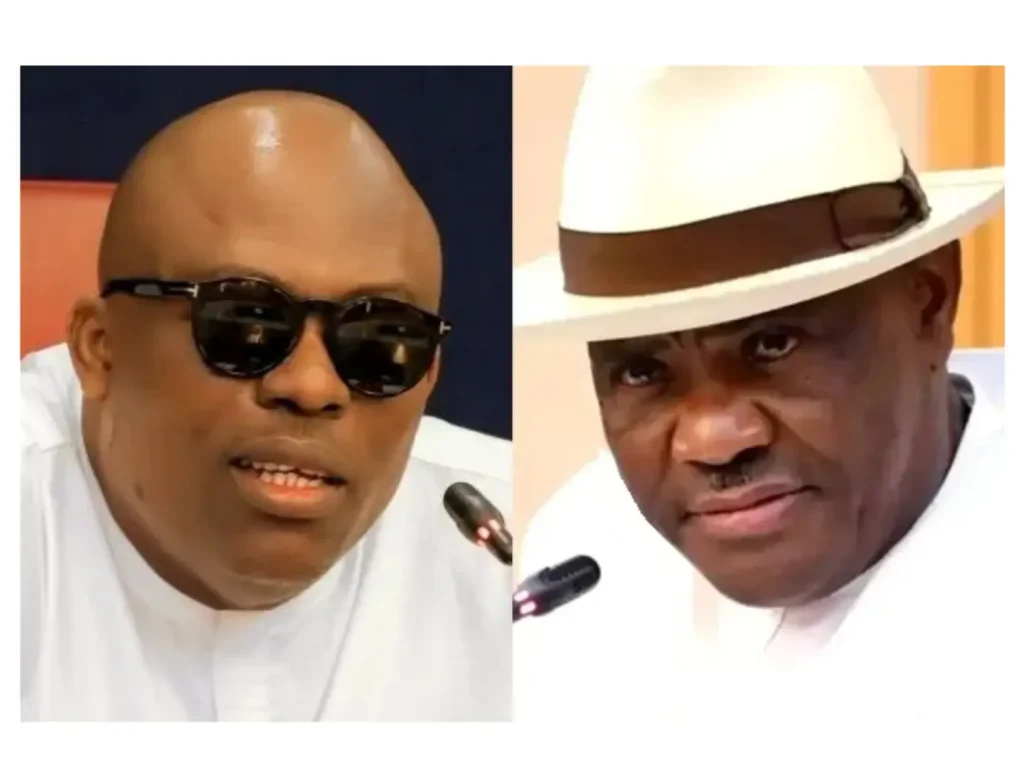
Rivers State Governor, Siminalayi Fubara has narrated how his political rise gathered momentum after being noticed by FCT Minister, Nyesom Wike, describing that encounter as a defining turning point that reshaped his path in public service while reinforcing his belief in peace-driven leadership.
Speaking at the New Telegraph Award and Dinner Night in Lagos, where he received a Man of the Year honour, the governor offered a reflective account of his political journey, saying the recognition symbolised endurance through pressure, reconciliation, and the sacrifices demanded by leadership.

Addressing the prolonged tensions that have trailed governance in the state, the governor said his calm and conciliatory posture had often been misread.
He maintained that what critics labelled weakness was a deliberate strategy to preserve peace and protect wider public interests.
Explaining his philosophy further, Fubara noted that restraint was essential for survival and stability, insisting that patience in leadership often produces long-term gains. He added that choosing peace over confrontation required courage and foresight.
In remarks likely to spark political discussion, the governor argued that perceived weakness can evolve into strength when applied wisely.
According to him, sustainable governance depends on compromise, maturity, and timing.
Expressing appreciation, Fubara commended residents of the state and his family for their composure during months of uncertainty.
He credited their steady support for helping his administration navigate political storms.
Making a symbolic gesture, the governor dedicated the award to Wike, acknowledging that the minister’s early confidence in him created opportunities that amplified his public voice. He said the discovery and mentorship played a central role in shaping his leadership trajectory.
Contextually, the governor’s comments come amid improving relations between the two political figures following mediation led by President Bola Tinubu in Abuja, with observers pointing to renewed cooperation as a sign of stabilisation.
Previously, Wike had expressed optimism about reconciliation during a project inspection in the capital, praising presidential intervention in resolving disagreements affecting governance structures in the state.
Separately, Fubara has publicly credited the minister for conceptual groundwork on key infrastructure initiatives, underscoring continuity in development despite earlier political friction.
Although the rivalry that emerged shortly after the governor assumed office in 2023 unsettled the state legislature and governance climate, recent actions — including executive and legislative engagement — indicate deliberate moves toward restoring political balance.
