
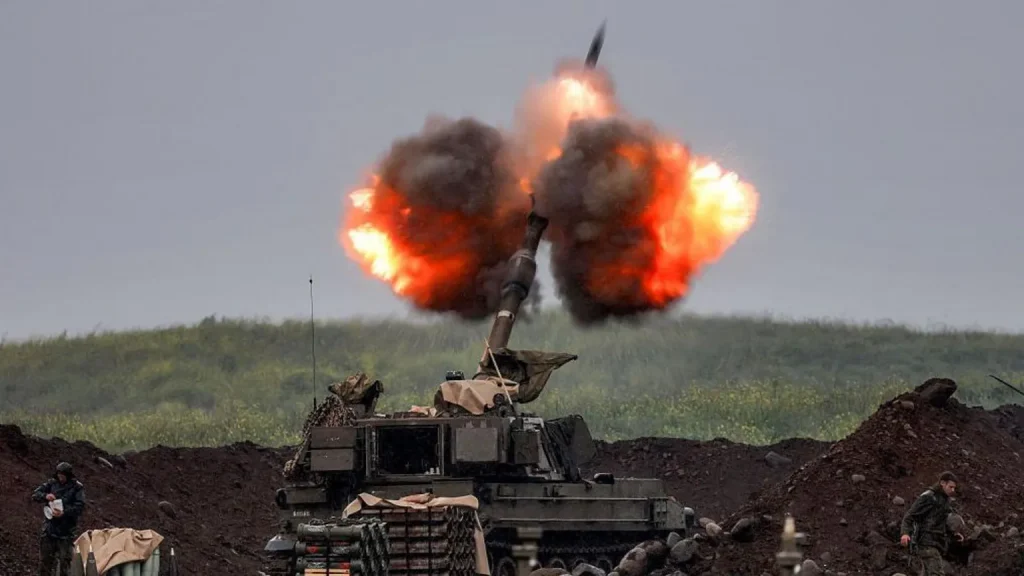
Fresh Israeli air raids pounded Iranian targets on Monday, escalating a conflict that has unsettled global oil markets and triggered the most severe energy shock in decades.
Blasts were reported in Tehran, according to Iranian media, while authorities in Saudi Arabia and the United Arab Emirates said their air defence systems intercepted incoming missiles and drones.

Assessing the damage so far, Fatih Birol, head of the International Energy Agency, disclosed that no fewer than 40 oil and gas facilities across the region have suffered severe destruction since the war began following joint Israeli and US operations against Iran.
In retaliation, Tehran has launched waves of missiles and drones at Israeli territory and strategic sites across the Gulf, targeting energy installations and US diplomatic missions.
Iranian authorities have also restricted maritime movement through the Strait of Hormuz, a critical route that handles about one-fifth of the world’s crude oil shipments.
With crude prices hovering above 100 dollars per barrel amid supply concerns, Donald Trump warned that the United States could “obliterate” Iranian power infrastructure if the strait is not reopened within 48 hours, setting a deadline late Monday night GMT.
Responding firmly, Iran’s Parliament Speaker, Mohammad Bagher Ghalibaf, declared that key infrastructure across the Middle East would become legitimate targets if Washington follows through on its threat.
Outlining the global economic implications, Birol noted that about 11 million barrels of oil per day have been taken off the market — a disruption greater than losses recorded during the oil crises of the 1970s. He warned that no nation would be shielded from the consequences if hostilities persist.
Financial markets reflected the tension, with Asian stocks dipping and benchmark crude briefly touching the 100-dollar mark again on Monday.
Iran has reportedly allowed limited passage for vessels from countries it considers friendly through the Strait of Hormuz, while cautioning that ships linked to nations it accuses of backing aggression may be denied access.
Lawmakers in Tehran are also considering imposing transit fees on maritime traffic, with Ghalibaf stating that shipping activity would not revert to pre-war conditions.
Although Trump hinted last week at the possibility of scaling down military action, his latest warning signals a potential escalation if Iran refuses to comply.
Inside Israel, Iranian missiles have managed to bypass air defence systems, striking southern towns including Dimona, near the country’s nuclear research facility, injuring dozens.
Another missile reportedly landed in Arad, prompting Netanyahu to vow personal pursuit of senior Iranian Revolutionary Guard commanders.
Rescue officials said one projectile landed a few kilometres from what is widely believed to be the Middle East’s only nuclear arsenal, though Israel maintains the Dimona site is strictly for research purposes.
Tehran described its strike near Dimona as retaliation for an earlier attack on its nuclear facility in Natanz. Israeli military authorities, however, said they were unaware of any such strike on Natanz.
Human rights monitors, including the US-based Human Rights Activists News Agency, estimate that at least 3,230 people have been killed in Iran since the conflict began, including more than 1,400 civilians.
Independent verification of casualty figures remains difficult due to restricted access to affected areas.
