
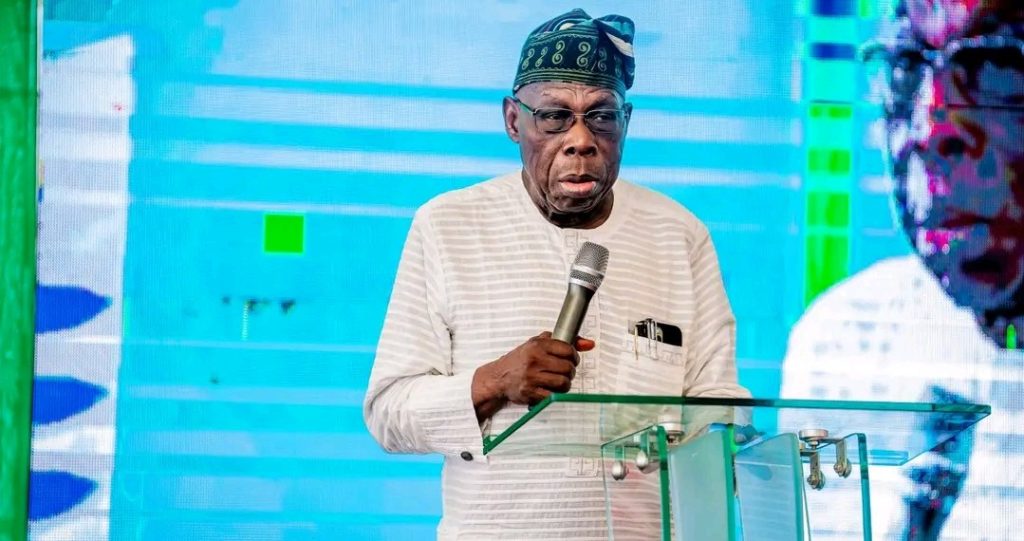
Former President Olusegun Obasanjo has expressed deep concern that Nigeria’s fight against Boko Haram has continued longer than the civil war that lasted 30 months.
He made the observation during the Toyin Falola Interviews which was streamed live on social media. Obasanjo said Nigeria cannot end insurgency without a clear and coordinated approach involving specialised training, the right equipment, reliable intelligence and modern technology.

According to him, the military needs training that goes beyond conventional warfare because insurgents often blend with civilian populations. He explained that countries such as Colombia have handled similar conflicts successfully and Nigeria can benefit from their expertise.
He noted that seeking foreign support for specialised military training should not be seen as a weakness but as a necessary step in strengthening national security.
Drawing from his experience in handling the Niger Delta crisis, Obasanjo said the possibility of internal sabotage by security personnel cannot be dismissed in the current fight against terrorism.
He added that insurgency requires specific types of equipment and intelligence systems which differ from those used in traditional battles. He stressed that Nigeria must build trust with international partners in order to gain access to sensitive intelligence.
Obasanjo also emphasised the importance of technology in modern warfare and said training, equipment, intelligence and technology must work together for any meaningful progress to be achieved.
He criticised the practice of allowing the military to manage arms procurement directly and maintained that defence acquisition is a specialised industry that requires proper oversight.
The former president recalled visiting Maiduguri in 2011 to understand the origins and leadership structure of Boko Haram. He stated that although the group initially rejected dialogue, it later agreed to a 21 day ceasefire.
He explained that the Federal Government did not maximise the opportunity to reach out to the group’s leaders during that period.
Other participants in the discussion included the Catholic Bishop of Sokoto Diocese, Matthew Kukah, and a former Deputy Governor of the Central Bank of Nigeria, Kingsley Moghalu.
