
By Samuel Sunday
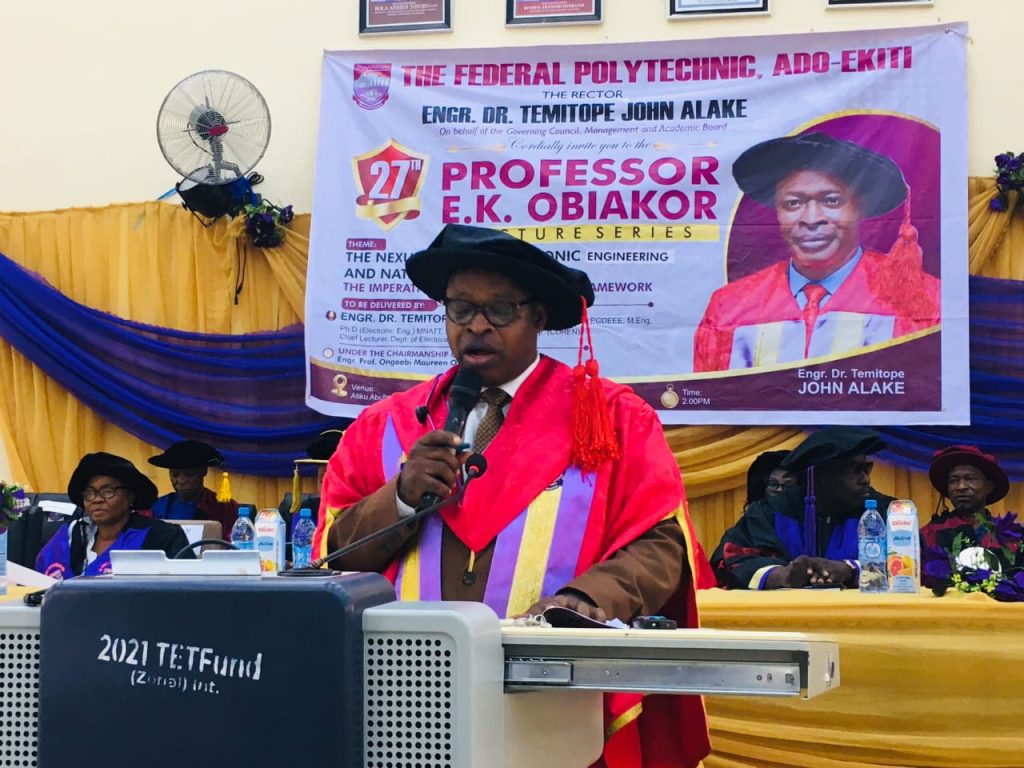
Rector of the Federal Polytechnic, Ado-Ekiti, Engr. Dr. Temitope John Alake, has called for a national skills revolution and increased investment in electronic engineering to accelerate Nigeria’s industrialisation, technological development and economic growth.

Alake made the call on Thursday, while delivering the institution’s 27th Inaugural Lecture at the main campus of the institution in Ado-Ekiti, the State capital under the Professor Edward Kanu Obiakor Lecture Series. The lecture was titled “The Nexus Between Electronic Engineering and National Development: The Imperative of Skills Acquisition Framework.”
The Don said Nigeria must strengthen its electronic engineering sector and build the capacity to manufacture critical electronic components locally, stressing that meaningful technological advancement was impossible without a robust electronics industry.
He specifically advocated the revival and re-energising of the Electronic Development Institute, EDI, Awka, to drive research, innovation and local manufacturing.
According to the inaugural lecturer, the development of semiconductor manufacturing capacity would be a major step toward growing Nigeria’s electronics industry, creating jobs and reducing dependence on imported electronic products.
“A deliberate investment in electronic engineering will enable Nigeria to move faster towards industrial and technological independence,” he said.
Alake also called for increased funding for polytechnic education through the Tertiary Education Trust Fund, TETFund, noting that technical and vocational education requires substantial investment in equipment, laboratories and other facilities.
He urged the government to review funding arrangements to enable polytechnics to provide students with adequate practical training and industry-relevant skills.
The lecturer recommended the development and institutionalisation of a National Skills Qualification Framework to align engineering education with industry needs and international standards.
He further advocated competency-based education and training, compulsory internships and apprenticeships, stronger industry-academia partnerships, continuous professional development, and the establishment of Centres of Excellence and innovation hubs.
Alake also urged stakeholders to review engineering curricula to accommodate emerging technologies such as Artificial Intelligence, the Internet of Things, 5G communications and renewable energy systems. He said lecturers must constantly update their knowledge, while students must prioritise skills acquisition alongside academic qualifications.

The Chairman of the 12th Governing Council of the Federal Polytechnic, Ado-Ekiti, Engr. Prof. Ongoebi Maureen Etebu, described the lecture as enlightening and rewarding. She said the lecture provided better insight into electronic engineering and its importance to national development.
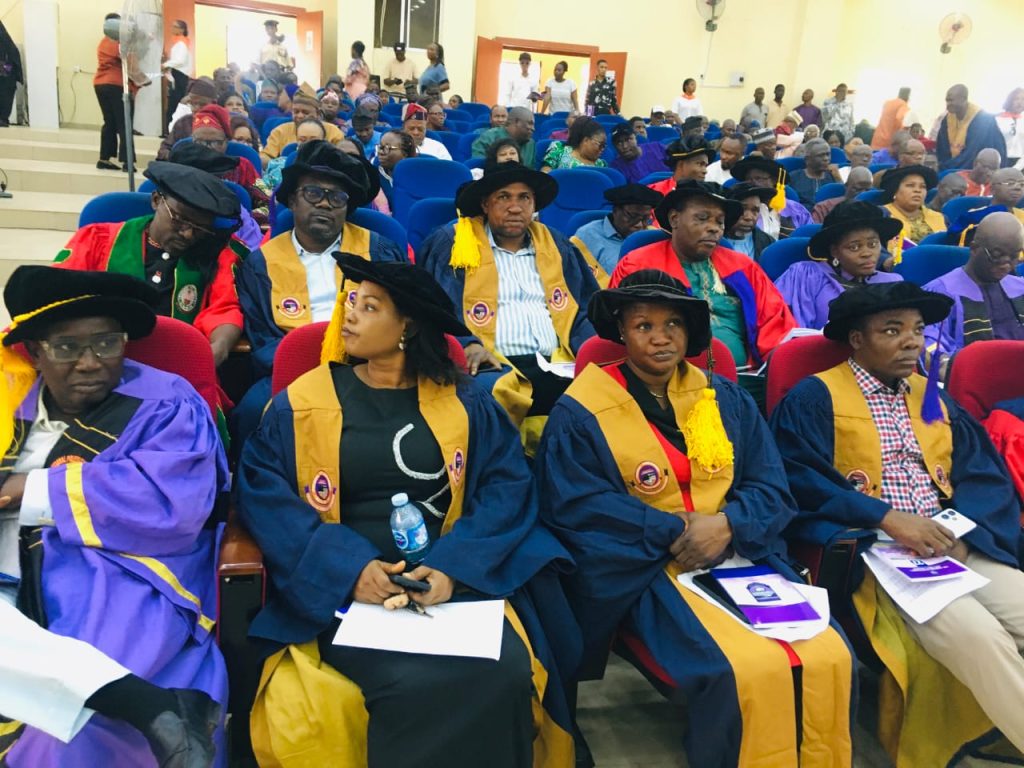
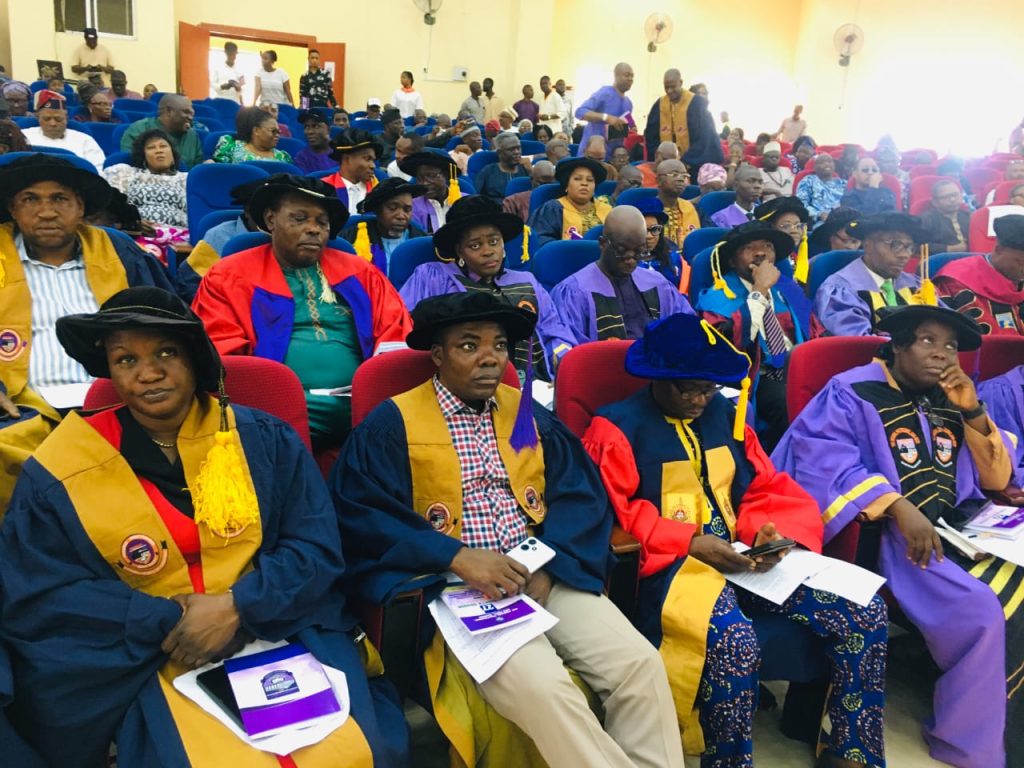
The event was attended by members of the governing council, professional associations, lecturers, students, rectors of other institutions, political leaders and other stakeholders.
Alake urged government, educational institutions, industries and professional bodies to collaborate to close the engineering skills gap, promote innovation and position electronic engineering as a major driver of Nigeria’s industrial and technological transformation.
