
By Our Reporter
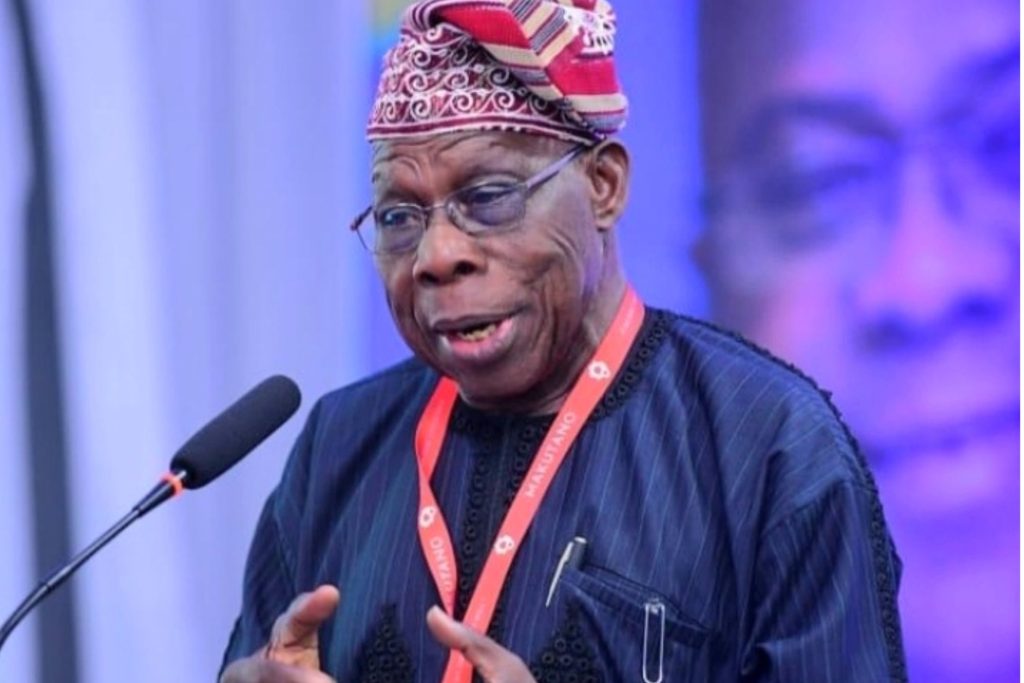
Former Nigerian President Olusegun Obasanjo has called for a “radically reimagined” African security framework rooted in accountable governance, continental solidarity, and technological sovereignty, warning that the continent faces a “new scramble for Africa” amid a fractured global order.

Addressing intelligence chiefs and security leaders at the third Mashariki Cooperation Conference (MCC III), Obasanjo said Africa’s conflicts are “not inevitable but the direct result of leadership failures and external manipulation.
“We are witnessing the fracturing of the post-1945 multilateral order,” Obasanjo told delegates.
“Russia’s invasion of Ukraine and the international community’s deeply inconsistent response to conflicts from Gaza to the Sahel have demonstrated that the rules-based international order is applied selectively.”
Five Concrete Propositions
Obasanjo laid out five pillars for a new African security architecture:
1. Primacy of the human being – Place ordinary citizens, not elites, at the centre of security policy
2. Genuine continental solidarity – Fully resource the African Standby Force and Continental Early Warning System
3. Confront financing of insecurity – Task intelligence agencies to lead against illicit financial flows that dwarf state budgets
4. Technological sovereignty – Build African-owned AI, cyber, and drone capabilities instead of relying on foreign systems
5. Accountable governance – The foundation without which no security strategy can succeed
The 89-year-old statesman stressed intelligence as “indispensable to conflict prevention and woefully underused,” citing ignored early warnings in Liberia, Sierra Leone, Burundi, DRC, and Sudan.
He urged the creation of “a continental intelligence community worthy of the name,” starting at regional level.
Leadership and Self-Reflection
Drawing on six decades as soldier, statesman, and mediator, Obasanjo referenced Nigeria’s role in Zimbabwe’s independence, ECOMOG in Liberia and Sierra Leone, and his chairmanship of the Burundi peace process.
“Success hinged on accurate intelligence, courageous honesty, and leadership willing to subordinate personal power to the common good,” he said.
He introduced his “Obasanjo 55+20 Leadership Framework — 55 measurable attributes and 20 core values for transformational leadership highlighting “courageous honesty” as critical: the willingness to speak truth to allies and adversaries alike.
Speaking directly to intelligence chiefs, including Kenya’s NIS Director General Noordin Mohamed Haji, he said: “Intelligence services that operate with integrity that are genuinely subordinate to civilian authority are not weaker services. They are stronger ones.”
“I am going to be 90 years of age. I have seen Africa at its most hopeful and at its most despairing,” Obasanjo closed.
“Africa’s conflicts are not inevitable. They are the product of specific, identifiable failures of leadership. What is required is the will to do it and the courage and audacity to get it done.”
