
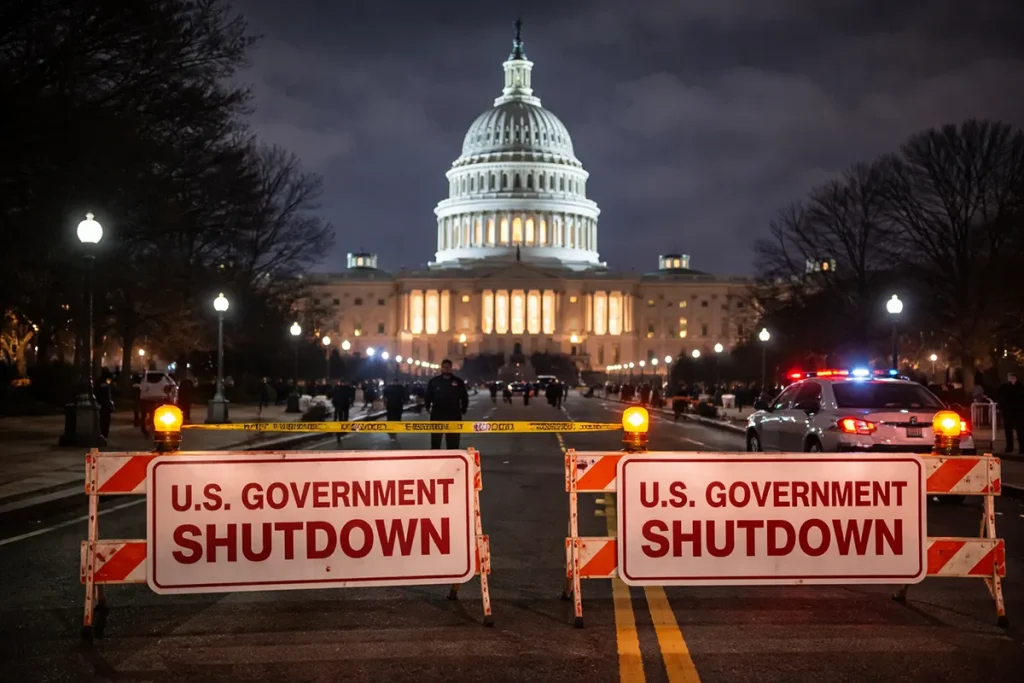
The United States government entered a partial shutdown early Saturday after Congress failed to approve a 2026 budget before the midnight deadline, though lawmakers expect the disruption to be short-lived.
The funding lapse, officials said, followed the breakdown of negotiations sparked by Democratic anger over the killing of two protesters in Minneapolis by federal immigration agents, which stalled agreement on additional funding for the Department of Homeland Security (DHS).

Senate Democratic Minority Whip, Mr Dick Durbin, accused the administration of misplacing priorities, saying federal resources were being used against peaceful protesters instead of focusing on serious crimes such as drug trafficking and child exploitation.
He argued that the approach had made Americans less safe, reflecting wider Democratic resistance to approving new DHS funding without reforms to immigration enforcement practices.
Budget analysts estimate that nearly 75 per cent of federal government operations could be affected, potentially disrupting activities across key sectors including education, health, housing and defence.
Despite the shutdown, leaders from both parties expressed confidence that the impasse would not last long, noting that Senate action had paved the way for a quick resolution.
If the House of Representatives approves the agreement next week, government funding would be restored within days, limiting the impact on public services, contractors and federal workers.
A longer shutdown, however, could see tens of thousands of federal employees placed on unpaid leave or required to work without pay until funding is reinstated.
On Friday night, the Senate passed a package covering five outstanding appropriations bills to fund most federal agencies through September, along with a two-week stopgap measure to keep DHS operational while talks on immigration policy continue.
The House, which was out of session when the deadline passed, is expected to return on Monday to consider the Senate-backed proposal.
President Donald Trump, who endorsed the deal, urged swift House approval, signalling his intention to avoid another prolonged shutdown following last year’s record-long disruption of federal services.
Progress in the Senate came after Republican Senator Lindsey Graham of South Carolina lifted a procedural block that had delayed passage of the package.
His objections were linked to provisions in the DHS stopgap bill and House-passed language repealing an earlier rule allowing senators to sue the Justice Department over seized phone records.
After Senate leaders agreed to schedule votes on his proposed legislation targeting so-called “sanctuary cities,” Graham withdrew his hold.
Democrats have remained united, insisting on changes to immigration enforcement before approving further DHS funding, citing the deaths of Alex Pretti and Renee Good in Minneapolis.
Party leaders say the shootings exposed weak oversight of federal agents and have renewed calls for tighter warrant requirements, limits on enforcement tactics and stronger accountability.
US media reports suggest the White House’s decision to separate DHS funding from the wider budget reflects pressure to adjust deportation policies amid political backlash.
Republicans are divided, with some acknowledging the need for reforms, while others warn against concessions they fear could weaken immigration enforcement.
Several conservative lawmakers have signalled plans to push tougher measures during DHS negotiations, including actions against states and cities that limit cooperation with federal authorities.
Although Congress has passed six of the 12 annual spending bills, they represent only a small portion of discretionary spending, making the funding lapse significant if prolonged.he
Meanwhile, the Office of Management and Budget has directed federal agencies to prepare for an “orderly shutdown,” expressing hope that the interruption will be brief.
