
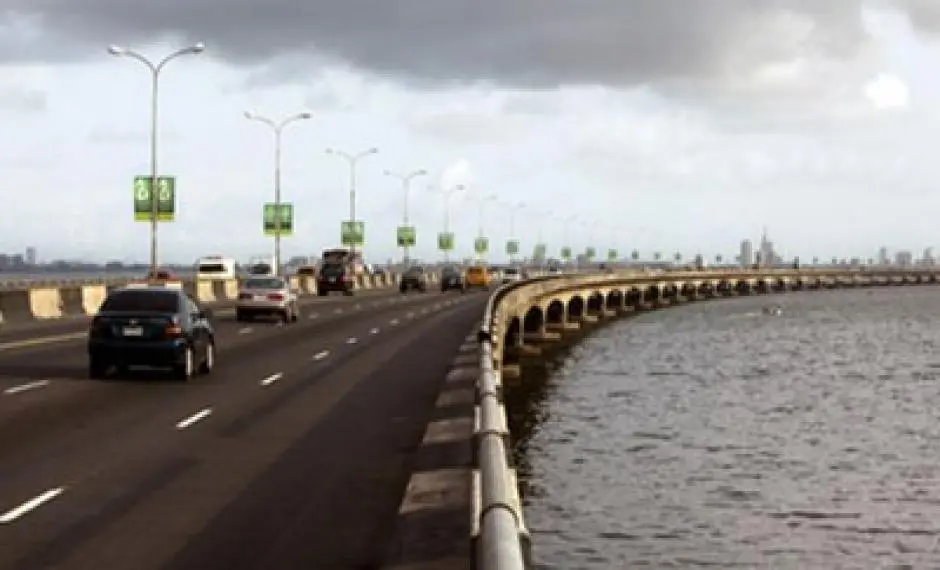
A 27-year-old woman, Aisha Maikudi Ibrahim has died after her vehicle reportedly somersaulted and plunged into the Lagos Lagoon from the Third Mainland Bridge in the early hours of Saturday.

Family sources said the deceased, who lived in Gbagada and worked as a vendor in Ikoyi, was returning from an event when the crash occurred.
“She called her mother at about 1 a.m., assuring her she would be home in 20 minutes,” her aunt, Mrs. Hadiza Oyewumi, told journalists on Sunday. “By 2 a.m. her phone was unreachable. By 6 a.m., her mother and elder sister set out to search for her.”
According to her, the family met emergency officials and onlookers near the bridge, where they discovered the vehicle’s bumper. “When they checked the number plate, it was hers,” Oyewumi explained.
The family suspects the vehicle may have somersaulted due to speed, though the exact cause remains uncertain.
What deepened their grief, however, was the response of rescue agencies.
“Officials from LASTMA and the marine police kept making calls but made no attempt to go into the water,” Oyewumi alleged. “Her father had to negotiate with local divers, who demanded N400,000 before they agreed to dive. Only after the payment was her body recovered.”
Her remains were retrieved from the lagoon between 2 p.m. and 3 p.m., nearly 12 hours after the crash, and buried immediately in line with Islamic rites.
In a statement, the family described Aisha as “a bright and ambitious entrepreneur” but condemned what they called the “commercialisation of human lives” in the failed rescue effort.
“The tragedy of her death is painful enough, but the greater pain lies in the response that followed,” the statement read. “Despite the presence of LASTMA and the marine police, no meaningful rescue was carried out. Local fishermen, instead, demanded money before acting.”
The family urged the Lagos State Government to strengthen its emergency response capacity by equipping agencies with the necessary tools and formally incorporating trained divers.
“Lagos cannot afford to commercialise life. Preparedness and compassion must define our response to emergencies,” they said.
