
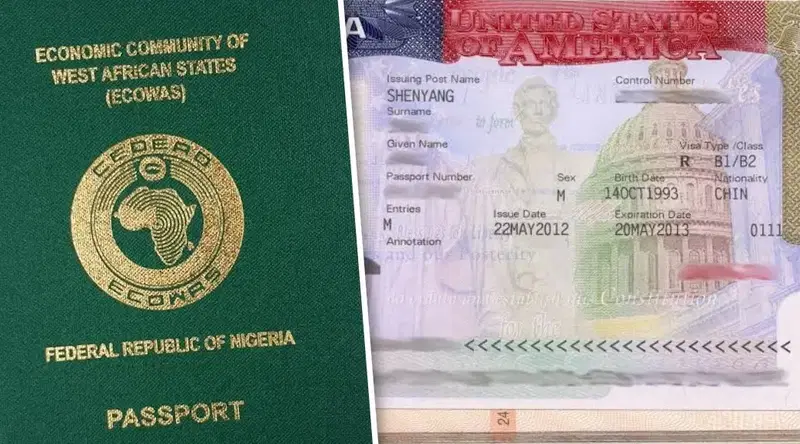
Nigerian citizens applying for certain United States visitor visas may be required to provide a refundable bond of up to $20,000 under a programme covering 50 countries, according to the US Department of State.
The requirement applies to eligible applicants for B-1 business and B-2 tourist visas travelling with passports issued by the listed countries. Depending on the individual application, consular officers may require a bond of $10,000, $15,000 or $20,000 before issuing a visa.

In a notice published on October 2, 2026, the department released the list of affected countries and their respective implementation dates. Nigeria is included, with the programme listed as taking effect for Nigerian applicants on January 21, 2026.
The policy operates under Section 221(g)(3) of the US Immigration and Nationality Act. According to the department, the requirement applies regardless of the country in which an applicant submits a visa application.
Full list of 50 countries subject to US visa bonds
The US Department of State listed the following countries and implementation dates:
- Algeria: January 21, 2026
- Angola: January 21, 2026
- Antigua and Barbuda: January 21, 2026
- Bangladesh: January 21, 2026
- Benin: January 21, 2026
- Bhutan: January 1, 2026
- Botswana: January 1, 2026
- Burundi: January 21, 2026
- Cabo Verde: January 21, 2026
- Cambodia: April 2, 2026
- Central African Republic: January 1, 2026
- Côte d’Ivoire: January 21, 2026
- Cuba: January 21, 2026
- Djibouti: January 21, 2026
- Dominica: January 21, 2026
- Ethiopia: April 2, 2026
- Fiji: January 21, 2026
- Gabon: January 21, 2026
- The Gambia: October 11, 2025
- Georgia: April 2, 2026
- Grenada: April 2, 2026
- Guinea: January 1, 2026
- Guinea-Bissau: January 1, 2026
- Kyrgyz Republic: January 21, 2026
- Lesotho: April 2, 2026
- Malawi: August 20, 2025
- Mauritania: October 23, 2025
- Mauritius: April 2, 2026
- Mongolia: April 2, 2026
- Mozambique: April 2, 2026
- Namibia: January 1, 2026
- Nepal: January 21, 2026
- Nicaragua: April 2, 2026
- Nigeria: January 21, 2026
- Papua New Guinea: April 2, 2026
- São Tomé and Príncipe: October 23, 2025
- Senegal: January 21, 2026
- Seychelles: April 2, 2026
- Tajikistan: January 21, 2026
- Tanzania: October 23, 2025
- Togo: January 21, 2026
- Tonga: January 21, 2026
- Tunisia: April 2, 2026
- Turkmenistan: January 1, 2026
- Tuvalu: January 21, 2026
- Uganda: January 21, 2026
- Vanuatu: January 21, 2026
- Venezuela: January 21, 2026
- Zambia: August 20, 2025
- Zimbabwe: January 21, 2026
How much must Nigerians pay for a US visa bond?
Nigerian applicants who are otherwise eligible for B-1 business or B-2 tourist visas may be required to post a bond of $10,000, $15,000 or $20,000.
The amount is determined by a consular officer during the visa interview. Payment of the bond does not guarantee that an applicant will receive a visa, as the individual must still satisfy all applicable immigration requirements.
Applicants are required to complete Department of Homeland Security Form I-352 and accept the bond conditions through Pay.gov, the US Department of the Treasury’s official online payment platform.
The State Department has warned applicants not to pay until a consular officer instructs them to do so. Those required to post a bond will receive specific payment instructions and a direct link to the authorised payment platform.
The department also cautioned against using unofficial websites or paying through channels that have not been specified in the consular instructions. Money paid outside the authorised system may not be refunded.
A bond can be paid by the applicant or a third party, including a relative, friend or business associate. However, the name of the person identified as the bond obligor on Form I-352 must match the name of the person making the payment.
If the applicant complies with all applicable bond conditions, the money may be returned in accordance with the programme’s rules.
US visa bond holders face travel restrictions
The programme also places conditions on how applicants who post bonds must enter and leave the United States.
According to the State Department, visa holders subject to the bond requirement must use designated commercial air ports of entry and exit, including US Customs and Border Protection preclearance locations.
They are not permitted to use charter aircraft, general aviation, land borders or sea ports of entry under the stated bond conditions.
Failure to comply with these requirements could result in difficulties entering the country or problems with the official recording of a traveller’s departure.
The department advises affected travellers to review their bond conditions and follow the instructions issued by the consular officer before making travel arrangements.
When will the US refund visa bonds?
The State Department has outlined several circumstances in which a visa bond can be cancelled and the money returned automatically.
These include situations where the visa expires without the holder travelling to the United States, provided the relevant departure and arrival records confirm that the person did not enter the country.
A refund may also be made when the visa holder has complied with the visa conditions and departed the United States within the authorised period, using a designated commercial air port of entry or exit.
Other qualifying circumstances include cases where US Customs and Border Protection determines that a traveller is inadmissible at the port of entry and cancels the visa, as well as certain cases involving an approved extension or change of status followed by timely departure.
The department relies on official arrival and departure records to determine whether the relevant conditions have been met.
However, a bond may be considered breached if the holder violates its conditions, overstays the authorised period or fails to comply with applicable immigration requirements. Such cases may be referred to US Citizenship and Immigration Services for a determination.
The State Department’s guidance makes clear that the bond is a financial guarantee tied to compliance with specified visa conditions, rather than a payment that automatically secures entry into the United States.
Nigerian travellers planning to apply for US visitor visas are therefore advised to confirm the latest requirements directly through official US government channels and wait for instructions from a consular officer before making any bond payment.
