
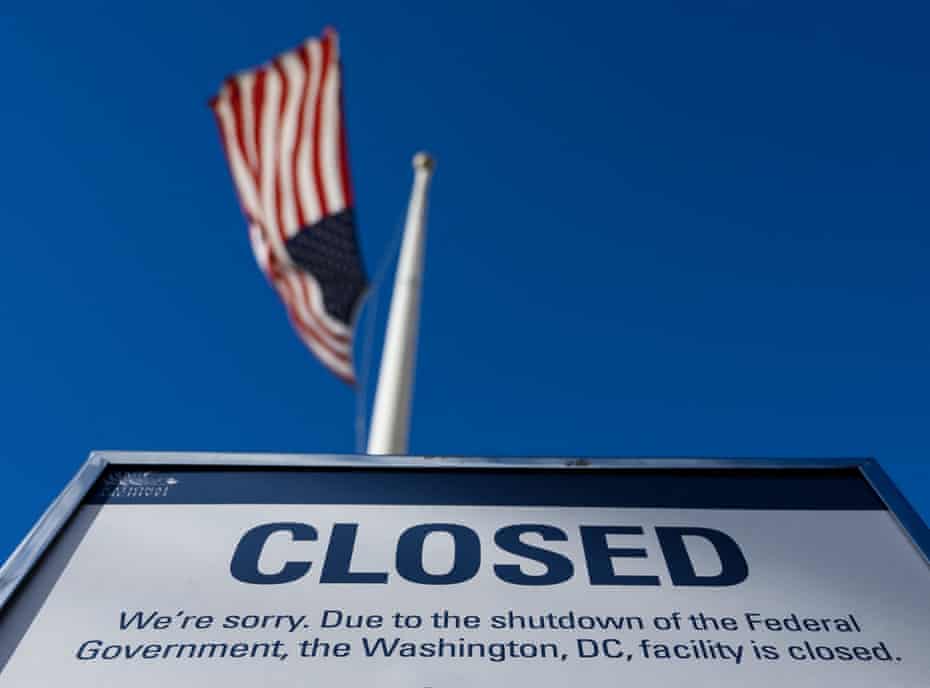
The United States government began shutting down early Wednesday after President Donald Trump and congressional leaders failed to resolve a budget standoff over health care funding.

The deadlock, which froze funding for multiple federal agencies, immediately triggered a political blame game in Washington. Democrats accused Republicans of blocking essential health programs, while the Trump administration insisted opposition lawmakers were holding the country “hostage” over spending demands.
Operations halted at 12:01 a.m. (0401 GMT) following a failed late-night Senate vote on a stopgap funding bill passed earlier by the House of Representatives. The impasse is expected to disrupt the lives of hundreds of thousands of federal workers and the millions of Americans who rely on government services.
“This Republican shutdown has just begun because Republicans wouldn’t protect America’s health care,” said Senate Majority Leader Chuck Schumer in a social media post shortly after midnight.
Trump, however, framed the shutdown as an opportunity. Speaking in the Oval Office, he suggested mass layoffs could target Democratic constituencies and said the pause might allow him to “get rid of a lot of things we didn’t want, and they’d be Democrat things.”
Impact: Workers Sent Home, Services Suspended
According to the Congressional Budget Office, up to 750,000 federal employees could be furloughed daily without pay until funding is restored. Essential services such as the military, the Postal Service, Social Security, and food stamps will continue operating, but many public-facing programs will be disrupted.
House Speaker Mike Johnson blamed Democrats for rejecting a temporary funding extension until late November. “Results: Moms and kids now lose WIC nutrition. Veterans lose health care and suicide prevention programs. FEMA has shortfalls during hurricane season. Soldiers and TSA agents go unpaid,” Johnson posted on X.
Former Democratic vice president Kamala Harris countered that Republicans, who control the White House and both chambers of Congress, bore full responsibility. “This is their shutdown,” she said.
Political Deadlock With No End in Sight
The Senate’s 60-vote threshold for budget bills meant Republicans needed at least seven Democratic votes to pass their short-term plan. Almost all Senate Democrats voted against it, demanding the restoration of hundreds of billions of dollars in health care spending—particularly for Obamacare subsidies that Trump has vowed to eliminate.
The shutdown is the first since the record-breaking 35-day closure in late 2018 and early 2019, also during Trump’s presidency. It marks the 22nd federal government shutdown since 1976.
Analysts say the duration remains uncertain, with partisan divisions deeper than in previous standoffs. A White House meeting earlier this week produced no breakthrough, raising fears of a prolonged halt with major economic and social consequences.
