
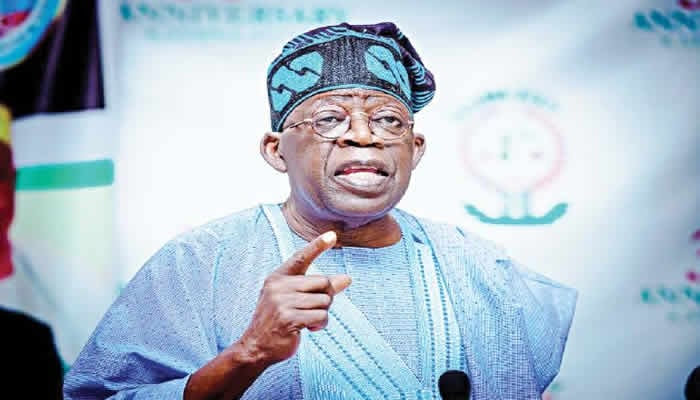
President Bola Ahmed Tinubu has renewed his administration’s commitment to tackling terrorism, banditry and other security threats confronting the country, describing them as serious obstacles to Nigeria’s economic growth.
Speaking on Monday at the second edition of the National Economic Council (NEC) Conference held at the State House Banquet Hall, Abuja, the President told state governors and members of the Federal Executive Council that insecurity remains a major concern demanding urgent and sustained action.

According to the President, criminal activities such as terrorism and banditry are not part of Nigeria’s values but have continued to disrupt livelihoods, investment and national development if left unchecked.
He assured the gathering that his government would continue to strengthen the nation’s security architecture and deepen partnerships aimed at restoring peace, noting that insecurity has caused widespread anxiety among Nigerians.
President Tinubu said defeating terrorism and banditry requires determination and resilience, stressing that his administration remains focused on ensuring the safety of lives, property and the nation’s economy.
He specifically praised the governors of Borno and Katsina states, Prof. Babagana Zulum and Dikko Umaru Radda, for their persistence and initiatives in addressing insecurity within their states, while also acknowledging the efforts of other governors.
Turning to the conference theme, “Delivering Inclusive Growth and Sustainable National Development: The Renewed Hope National Development Plan 2026–2030,” the President said the event underscored a shared commitment by all levels of government to national progress.
He expressed satisfaction with the outcome of ongoing economic reforms, noting that recent monetary and fiscal policies have helped stabilise the economy and improved Nigeria’s global standing.
The President said the reforms have boosted the financial capacity of states and local governments through improved and more predictable Federation Account Allocation Committee (FAAC) disbursements, enabling them to pay salaries, invest in infrastructure and expand social services.
He further stated that his administration has strengthened macroeconomic stability through better revenue generation, enhanced public financial management and improved fiscal coordination across tiers of government.
President Tinubu highlighted infrastructure development in transport, power, digital connectivity, housing and irrigation as key drivers of inclusive growth, alongside expanded social investment programmes targeting vulnerable groups, youths, women and small businesses.
He said initiatives such as the Renewed Hope Ward Development Project reflect the administration’s commitment to grassroots development using a bottom-up approach.
According to him, the Renewed Hope National Development Plan 2026–2030 represents the next phase of Nigeria’s development journey, focusing on economic diversification, human capital development, subnational competitiveness, private sector–driven growth and climate resilience.
The President stressed that the success of the plan would largely depend on effective implementation at the state and local government levels, describing the NEC as a critical platform for aligning national goals with subnational priorities.
President Tinubu’s remarks highlight the strong link between security and economic growth, reinforcing the view that sustainable development cannot thrive without peace. While the policy direction appears clear, consistent implementation and visible results at the grassroots will be crucial in convincing Nigerians that progress is truly being made.
