
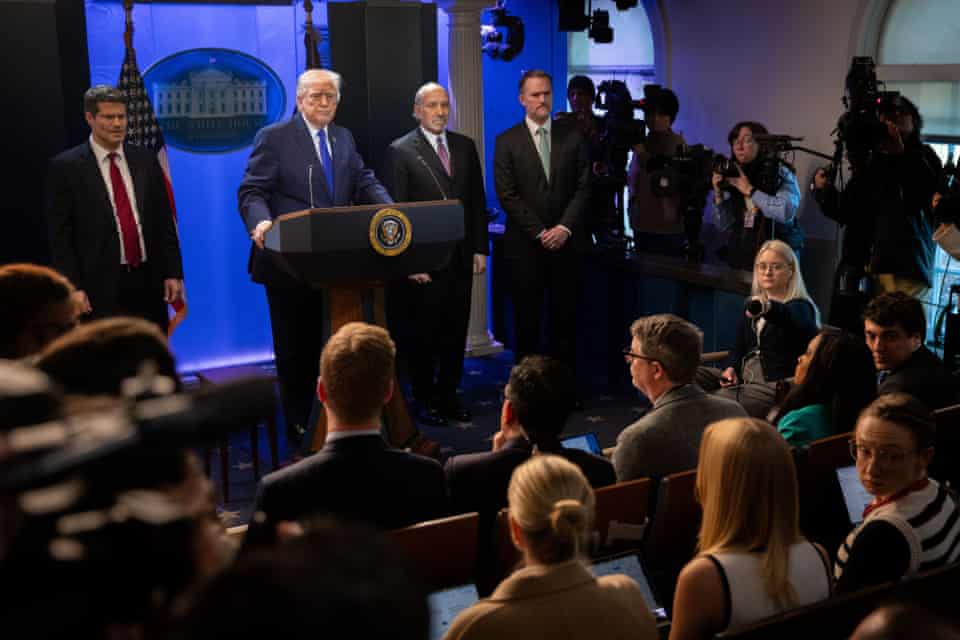
Tensions erupted in Washington after President Donald Trump publicly rebuked the nation’s highest court over its decision to invalidate key elements of his global tariff programme.
Addressing reporters at the White House, the president labelled the judgment “deeply disappointing,” saying he felt embarrassed by what he described as a lack of courage from certain members of the Supreme Court of the United States.

Earlier in the day, the court ruled that the administration had exceeded its authority by invoking emergency powers to impose country-wide import levies, a decision that significantly disrupted the president’s trade strategy.
From the briefing podium, Trump praised the dissenting justices Clarence Thomas, Samuel Alito and Brett Kavanaugh, thanking them for what he called their principled stance.
Turning critical, the president argued that the majority ruling was misguided, accusing some justices of bringing partisan considerations into what he insisted was a matter of economic security.
Adding to his remarks, Trump alleged without presenting evidence that outside interests had influenced the outcome, while also linking the case to his electoral mandate and broader policy goals.
Reaffirming his position, he maintained that tariffs remain central to protecting domestic industry and national interests, describing the case as personally significant to his economic vision.
Despite the setback, the president indicated he is reviewing other legal routes to pursue similar trade measures, though he declined to outline specific statutory options.
Defending his record, Trump cited what he portrayed as strong market performance, referencing movements in the Dow Jones Industrial Average and the S&P 500 as signs of economic resilience.
Responding to critics, including prominent economists, he dismissed warnings about the feasibility of his tariff agenda, insisting his policies had already delivered measurable gains.
Legal observers say the ruling narrows the executive branch’s use of emergency powers for trade actions, while leaving open other mechanisms that could invite further debate and possibly congressional involvement in shaping future tariff policy.
