
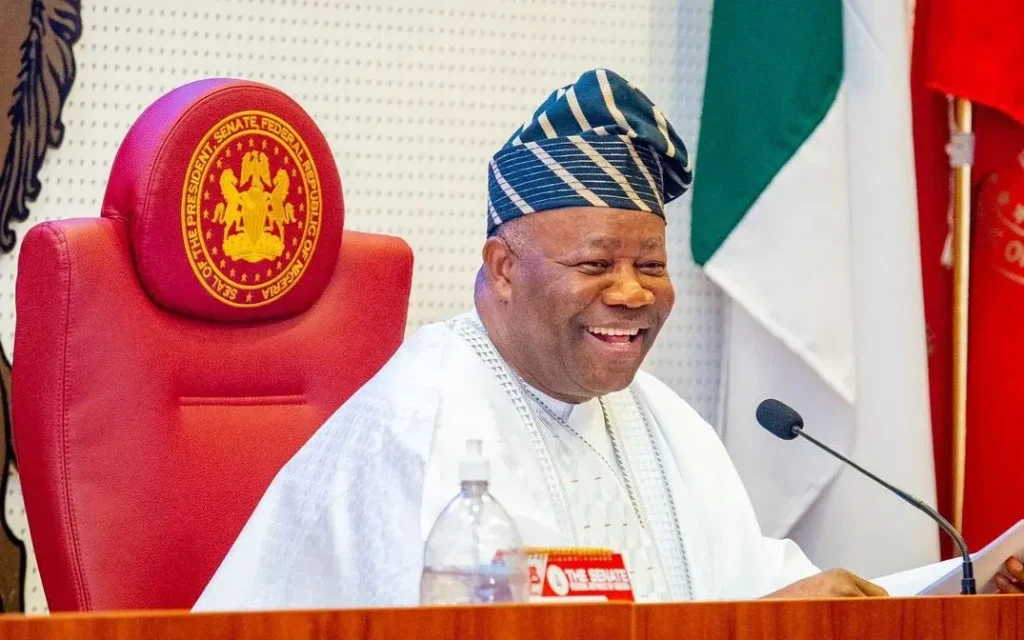
The Senate of Nigeria on Tuesday passed the Electoral Act, 2022 (Repeal and Re-Enactment) Bill 2026 after intense deliberations that culminated in a divisive vote on Clause 60.
Proceedings grew tense when Senator Enyinnaya Abaribe demanded a formal division on the clause, triggering a noisy exchange among lawmakers. The Senate President, Godswill Akpabio, initially indicated the request had been withdrawn, a position quickly challenged by opposition members.

Citing parliamentary rules, Deputy Senate President Barau Jibrin argued that reopening a matter already ruled upon would breach established procedure, further heightening tensions on the floor.
As the debate intensified, Senate Leader Opeyemi Bamidele clarified that a prior rescission motion nullified earlier decisions, making the renewed consideration of Clause 60 procedurally valid.
Lawmakers eventually proceeded with a division after Abaribe invoked standing orders to challenge provisions permitting manual transmission of election results when electronic systems fail. He sought to remove that fallback clause, insisting electronic transmission should prevail.
Voting followed a headcount procedure, with a clear majority supporting retention of the proviso. Opposition senators who stood against the clause were outnumbered, allowing the provision to remain in the bill.
Earlier, legislative activity had briefly stalled as senators moved to rescind previous amendments and return the bill to the Committee of the Whole for clause-by-clause reconsideration.
Consultations at the presiding desk and a subsequent closed session addressed concerns over timing, drafting inconsistencies, and operational implications for future elections.
Debate also referenced the timetable announced by the Independent National Electoral Commission for the 2027 general elections, with lawmakers warning that legal timelines, logistics, and inclusiveness required harmonisation within the bill.
The rescission motion highlighted technical discrepancies across multiple clauses, including numbering and cross-referencing issues, which lawmakers said needed correction to ensure legislative clarity.
With deliberations concluded, the Senate advanced the re-enactment bill, signalling lawmakers’ intent to refine Nigeria’s electoral framework ahead of future polls.
