
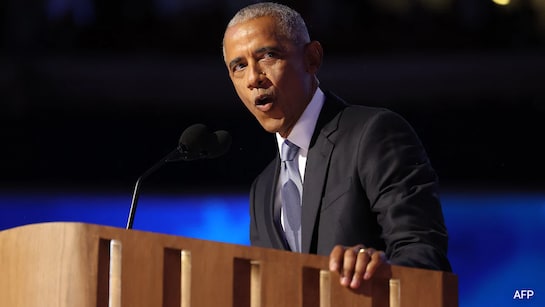
Former United States President, Barack Obama, has openly thrown his weight behind Harvard University amid its standoff with the administration of President Donald Trump over issues bordering on academic freedom and alleged antisemitism.

Obama, in a statement, applauded Harvard for resisting what he described as an “unlawful and ham-handed” attempt by the federal government to suppress free academic expression.
He said: “Harvard has set an example for other higher-ed institutions – rejecting an unlawful and ham-handed attempt to stifle academic freedom, while taking concrete steps to make sure all students at Harvard can benefit from an environment of intellectual inquiry, rigorous debate and mutual respect. Let’s hope other institutions follow suit.”
The former president’s comment followed the Trump administration’s decision to freeze $2.3 billion in federal funds allocated to Harvard, citing rising antisemitism allegedly tied to pro-Palestinian protests on campus.
Part of the federal government’s demands include limiting the influence of staff members perceived to prioritise activism over academic research, and introducing external audits to enforce diverse viewpoints within the institution.
Reacting, Harvard’s President, Alan Garber, criticised the move, saying it threatens the autonomy of private universities and their mission to pursue knowledge freely.
He said the demands, if accepted, would amount to government interference in academic matters, undermining the university’s core values.
“No government should have the power to dictate who a private university admits, hires, or what it teaches,” Garber said.
The ongoing face-off has reignited debates around academic freedom and free speech in American universities, with other prestigious institutions such as Princeton, Cornell, Northwestern, Brown, and the University of Pennsylvania also facing funding suspensions or federal scrutiny.
To cushion the financial blow, Harvard is reportedly planning to raise $750 million through bond issuance, while Princeton intends to raise $320 million.
According to Charlie Eaton, an economic sociologist, issuing bonds may be a smart way for elite schools to navigate the funding crisis, especially if the interest rates are lower than the returns on their large endowments.
