
By Ayodele Abere
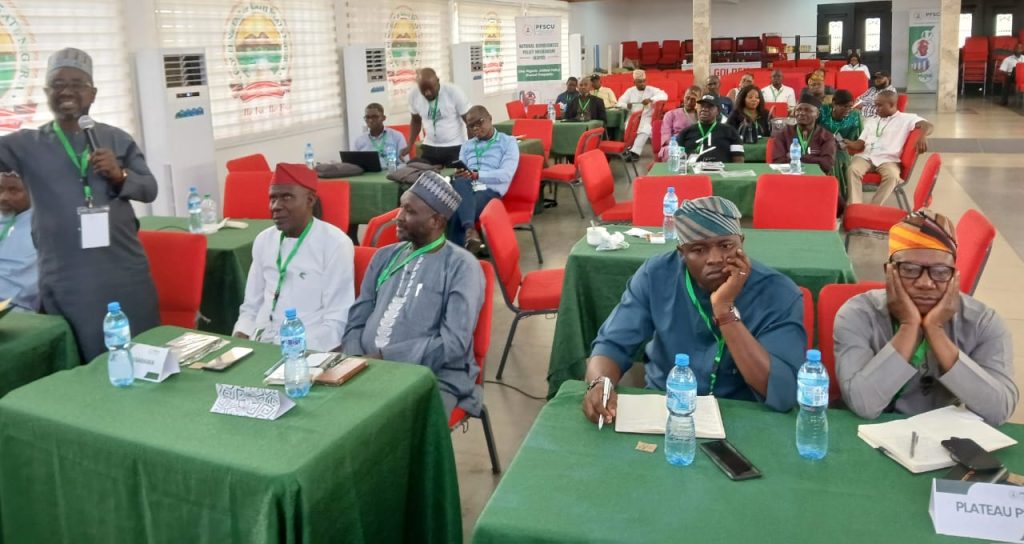
Stakeholders in Nigeria’s food and agriculture sector converged in Ekiti State for the National Agribusiness Policy Mechanism (NAPM) Stakeholders Planning and Validation Workshop, aimed at using field data to drive food security under President Bola Ahmed Tinubu’s Renewed Hope Agenda.


Declaring the workshop open on Monday, the Ekiti State Commissioner for Agriculture and Food Security, Mr. Ebenezer Boluwade, welcomed participants on behalf of Governor Biodun Abayomi Oyebanji, saying the state is proud to co-host and partner with the Presidential Food Systems Coordinating Unit (PFSCU) and NAPM teams.
“The Presidential Food System Coordinating Unit is a national initiative to improve and accelerate agricultural productivity, stabilize food prices, strengthen Nigeria’s food systems, respond to food security challenges, and create sustainable and enabling food systems,” Boluwade said.
Adding that PFSCU serves as a coordinating body between federal, state, and local governments to implement the Renewed Hope Agenda.
The commissioner said the purpose of the Ekiti workshop is to validate reports and inputs from the Minor Season evaluation of Cycle 2 held at the National Agricultural Extension and Research Liaison Services (NAERLS), Ahmadu Bello University, Zaria, from February 12–13, 2026, and to plan for the next cycle.
“Your coming to plan and validate the reports for the next cycle, and make necessary recommendations to guarantee food security, is a welcome idea,” he said.
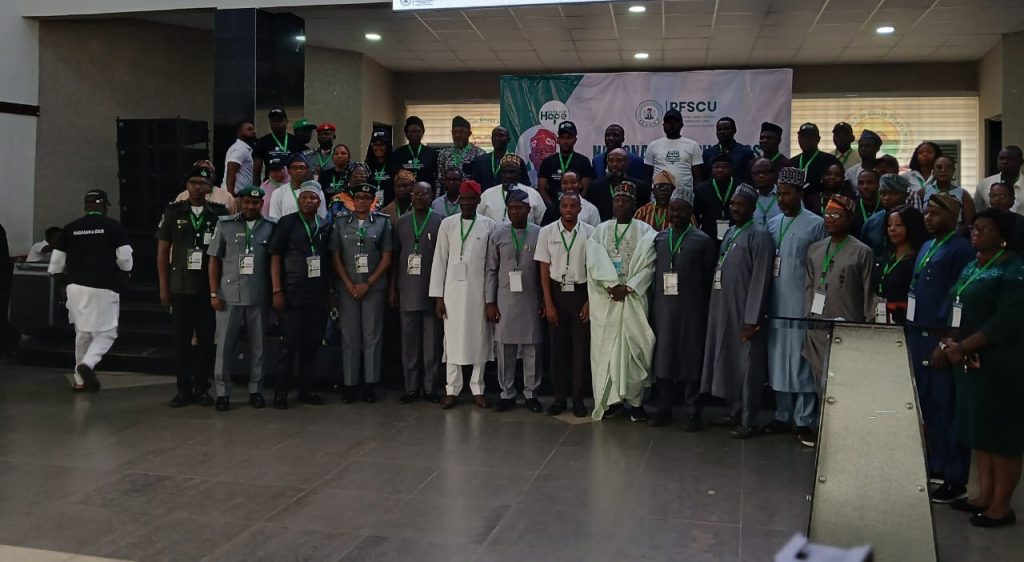
Commissioner Boluwade urged participants to use the insight gathered from the workshop to develop targeted strategies aiming to enhance agricultural interaction and resolve systemic issues across all agro-ecological zones, adding that Ekiti would continue to support and collaborate with NAPM.
Speaking on the main objective of the workshop, the Project Coordinator for National Agribusiness Policy Mechanism (NAPM), at PFSCU, office of the Vice President, Khalid Saini Kaikia explained that the objective is review outcomes of the NAPM major dry season cycle to assess farmer performance and output, validate forecasts from the ongoing minor season survey on farmers’ intentions and projected production, and conduct forward-looking planning for the approaching wet season.
“We want to see what are the foreseeable changes in the wet season, given the challenges that we have been facing price market instability, input costs and all,” Kaikia said.
Stressing that the overall purpose is to have all agricultural stakeholders on board federal, state, local government, and farmers, to have everybody on the same page to increase production and security.
On his part, the National Agricultural Extension and Research Liaison Services (NAERLS), Ahmadu Bello University, Zaria,
Professor Adetunji Olatunji, said the major takeaway from the programme was that farmers are abandoning staple crops due to input costs.
According to the professor of note,, many of the farmers deviated from crops that they are known to be cultivating. They move away because of the issue of inputs. “The prices of agro-inputs went high in the cycle that we just finished,” he said.
He warned that the shift away from maize and rice threatens food security. “If our farmers are now leaving maize production because of the cost of fertilizer and other inputs, it will not be good for food security. The poultry industry is highly dependent on maize.”
Citing survey data, Prof. Adetunji said farmers recorded per-hectare losses of about N120,000 for one crop and N55,000 for another during the major dry season. The NAPM survey, he noted, covered at least two states per zone and three in North Central, making it “very representative” and comparable to NAERLS’ national surveys.
“No farmer will be interested in making losses year in year out. The implication is that smallholder farmers who produce 70% of our food feed themselves first and sell the surplus. If they leave staple crops, Nigeria will face reduced productivity,” he said.
Speaking further, Adetunji noted that cost of production for staple crops is high, while the prices of commodities are low. He therefore call for interventions to keep farmers on the farm.
Calling for Proactive Action, the Agriculture Advisor to the Nigeria Governors’ Forum (NGF) Professor Abba Gambo who really commended Ekiti State Governor for hosting the stakeholders workshop, said the 2025 review showed plenty of challenges, lapses and gaps, meaning needed food security is still not being achieved.
He said they have learned from most of the states that farmers are leaving their farms because it’s no longer profitable. “This is a very serious issue. We have to motivate the farmers to stay on their farms and make sure that youths and women are being motivated into farming,” he said.
The Executive Director of NAERLS, Prof. Yusuf Ahmad Sani, stated that the workshop’s focus on impact assessment validation, food balance discussions, farmers’ intention surveys, and projections for 2026/2027 underscores the importance of data-driven planning.
“These are not just technical exercises; they are essential tools for ensuring that policies, investments, and interventions are grounded in real-time evidence from the field,” Sani said.
He reaffirmed NAERLS’ commitment to providing field-based data, strengthening advisory systems, and supporting policy formulation with PFSCU and other stakeholders.
In his goodwill message at the workshop, the National Agricultural Development Fund (NADF), represented by Mr. Emmanuel Saseun, pledged to align its 2026/2027 catalytic funding window with the validated work plan from the ongoing National Agribusiness Policy Mechanism (NAPM) Stakeholders Planning and Validation Workshop in Ado-Ekiti.
The NADF boss noted that the 2025/2026 agricultural cycles recorded successes but also exposed “gaps, logistics delays, input access bottlenecks, data inconsistencies, and climate shocks that tested our resilience.
“These are not failures, they are instruction manuals for the future. NADF has been documenting these lessons alongside you, and we commit to translating them directly into smarter funding priorities for the coming season.
“This workshop is not a ritual. It is where we move from lesson learning to season-shaping,” he said, urging agencies to validate boldly, disagree respectfully, but leave with a common playbook.
The workshop featured sessions on cropping patterns, input recommendations, historical trends, and projections for the 2026/2027 production cycle to shape practical, timely advisory services for farmers nationwide.
NAPM is coordinated by the Presidential Food Systems Coordinating Unit (PFSCU) in the Office of the Vice President, working with federal and state MDAs, NGF, and research bodies like NAERLS to align data, policy, and interventions for food security.
