
The Government of Japan has designated Kisarazu City in Chiba Prefecture as the official host city for Nigerians who wish to live and work in the country.

This was made known in a statement issued on Friday by the Director of Information at the State House, Mr Abiodun Oladunjoye.
According to the statement, the initiative forms part of Japan’s broader strategy to deepen cultural diplomacy, promote economic growth, and strengthen workforce productivity. The announcement was made on the sidelines of the Ninth Tokyo International Conference on African Development (TICAD9).
Under the arrangement, Japan will introduce a special visa category for highly skilled and innovative young Nigerians, while artisans and other blue-collar workers willing to upskill will also benefit.
At a ceremony hosted by the Japan International Cooperation Agency (JICA), other African countries were similarly linked with Japanese municipalities. Nagai in Yamagata Prefecture was named host city for Tanzania, Sanjo in Niigata Prefecture for Ghana, and Imabari in Ehime Prefecture for Mozambique.
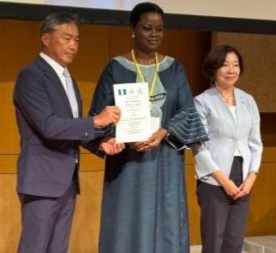
Nigeria’s Acting Ambassador to Japan, Mrs Florence Adeseke, alongside the Mayor of Kisarazu, Mr Yoshikuni Watanabe, received the certificate designating Kisarazu as the official hometown for Nigerians in Japan.
The statement noted that the arrangement would promote manpower exchange and contribute to economic growth in both countries. Japanese authorities also expressed hope that the initiative would boost local populations and support regional revitalisation.
Kisarazu had earlier hosted Nigeria’s contingent during the COVID-19 delayed Tokyo 2020 Olympic Games, when Team Nigeria held its pre-games training camp in the city.
In his keynote address at TICAD9, Prime Minister Shigeru Ishiba announced $5.5 billion in new investments in Africa. He stressed the importance of co-creation, mutual understanding, and localised solutions to address the continent’s development challenges.
He said Japan would focus on private sector-led growth, youth and women empowerment, and regional integration.
While acknowledging the challenges of Japan’s ageing population and shrinking agricultural land, the Prime Minister called on African nations to strengthen cooperation with Japan in ways that benefit both sides.
