
By Samuel Sunday
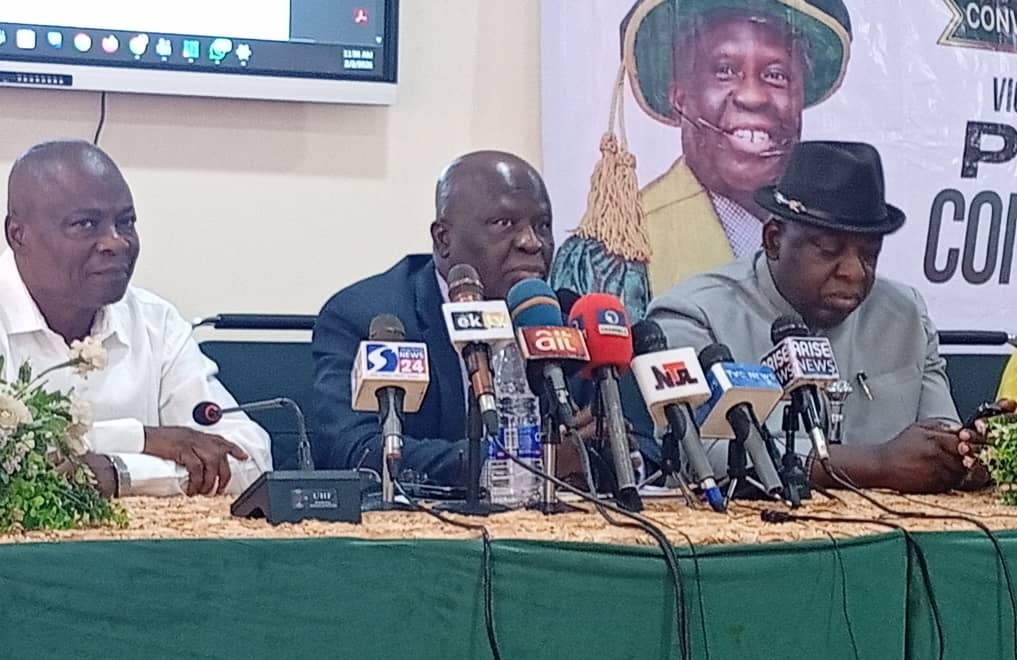
The Federal University Oye-Ekiti (FUOYE) has recorded a 310 per cent increase in Internally Generated Revenue (IGR) over the last five years, marking a major leap in financial sustainability and institutional growth under the outgoing Vice-Chancellor.

The Vice-Chancellor, Professor Abayomi Fasina disclosed this on Monday while briefing newsmen at the newly commissioned Senate Building of the University as part of the activities put in place for the 10th Convocation ceremony of the Institution.
Stating that the revenue growth resulted from disciplined financial management, blockage of leakages and deliberate risk-to-wealth initiatives that strengthened the university’s capacity to fund academic and infrastructural development.
Fasina said the financial expansion was accompanied by increased student enrolment and programme relevance, which positioned FUOYE as the fourth most subscribed university in Nigeria out of 303 institutions, according to national admission statistics. He added that the university’s part-time education model was designed to take quality education to the grassroots, widen access and promote inclusiveness without compromising academic standards.
The Vice-Chancellor noted that FUOYE experienced massive academic expansion, growing from eight to eighteen faculties and increasing its academic programmes from 73 to 91, all of which are fully accredited, with interim accreditation secured for Pharmacy, Statistics and Radiography. These developments, he said, strengthened the university’s national appeal and boosted its international profile, leading to its ranking as fourth in Nigeria in the Times Higher Education (THE) 2026 rankings.
FUOYE also made its debut in the THE World University Rankings, emerging 12th among Nigerian universities and ranking within the 1501-plus global band, while securing seventh position nationally in the Interdisciplinary Science Rankings and tenth in Nigeria in the Sub-Saharan Africa Rankings. In addition, the university ranked 19th among young universities in Nigeria in the 2024 AD Scientific Index, with six academic staff listed among the top 20 to 30 per cent of scientists globally, reflecting rising research impact and visibility.
On human capital development, the Vice-Chancellor disclosed that FUOYE recorded over 204 professorial promotions within five years and supported staff capacity building through training, conferences and advanced degree programmes. He said 34 academic staff attracted competitive research grants and equipment valued at over ₦430 million, including a $534,000 international grant from the Bill and Melinda Gates Foundation secured by Professor Emmanuel Bakare for data modelling and analytics research.
Infrastructure development, he said, remained a defining feature of his administration, with over 160 projects executed across the university’s campuses under the “Blue Roof Legacy.” These include the Senate Building, a 1,000-seat auditorium, Faculty of Law complex, modern laboratories, academic buildings, a computer-based test centre and a microfinance bank, alongside the deployment of the FUOYE Integrated Digital System, which significantly improved internet connectivity and service delivery.
The Vice-Chancellor further said FUOYE established new Colleges in Medicine, Computing, Cybersecurity, Software Engineering, Systems Engineering, and Data Science, as well as the FUOYE Business School, which has graduated its first set of students. The university also strengthened industry and global linkages through the Professors of Practice, Diaspora Professors and Emeritus Professors initiatives, drawing distinguished professionals, international scholars and retired senior academics into teaching, research and mentorship.
At the latest convocation ceremony, 7,396 students graduated, including 131 First Class degree holders, with Adeniyi Maryam Adedolapo of the Department of Anatomy emerging as the overall best graduating student with a CGPA of 4.89. The Vice-Chancellor said the university sustained a stable academic calendar, affordable fees and campus peace, expanded community engagement through 14 outreach centres across Ekiti State, produced a successor through a transparent process, and adopted a long-term Strategic Plan (2026–2050) to consolidate gains and position FUOYE for sustained national relevance and global competitiveness.
