
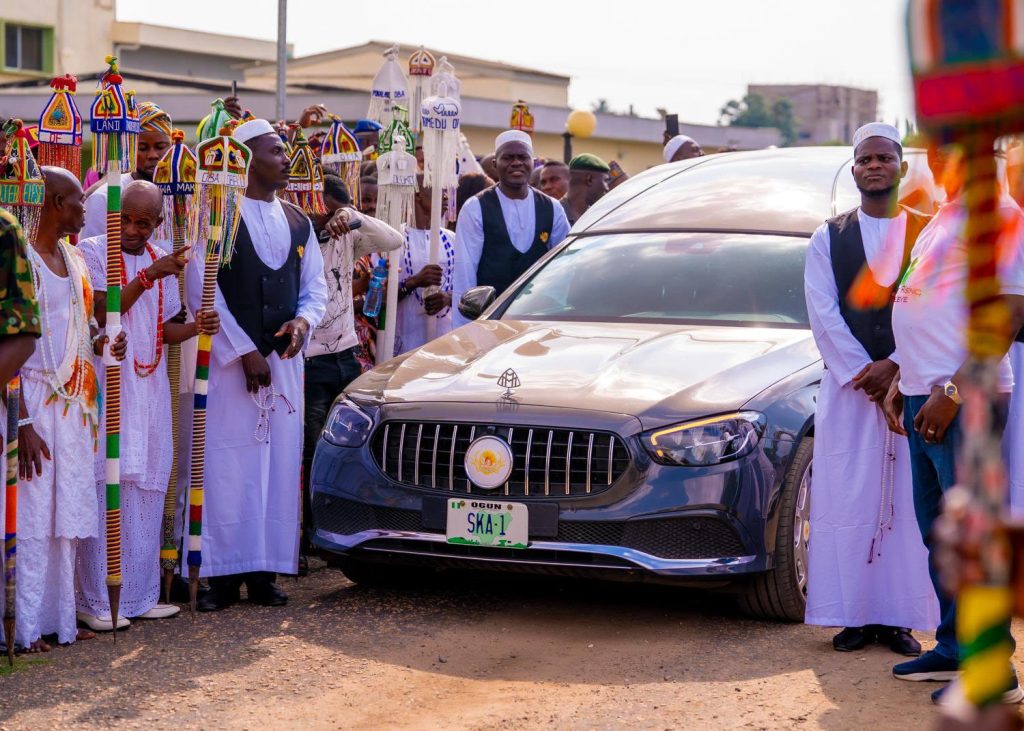
Ijebu-Ode, Ogun State, was enveloped in solemnity on Monday as prominent Nigerians gathered to bid farewell to the Awujale and Paramount Ruler of Ijebuland, Oba Sikiru Kayode Adetona, who was laid to rest amidst glowing tributes and traditional rites.

The burial ceremony attracted high-profile dignitaries from across the country, including immediate past Vice President, Prof. Yemi Osinbajo (SAN); Ogun State Governor, Dapo Abiodun; Lagos State Governor, Babajide Sanwo-Olu; Deputy Governor of Ogun State, Noimot Salako-Oyedele; Speaker of the State House of Assembly, Oluwadaisi Elemide; former governors, Chief Segun Osoba and Senator Gbenga Daniel; and Senator Adegbenga Kaka.
Others included Africa’s richest man and Chairman of Dangote Group, Alhaji Aliko Dangote; Ogun West Senator Solomon Adeola; Ogun Central Senator Salisu Shuaib; and the Governor’s wife, Mrs. Bamidele Abiodun.
The funeral, held in Ijebu-Ode, was a moment of reflection on the life and reign of the revered monarch, who passed on after decades of impactful leadership in Ijebuland and Nigeria as a whole.
Oba Adetona’s burial was marked by rich traditional rites in line with the customs of the Ijebu people. The ceremony was attended by traditional rulers, political figures, and community members, symbolising the unity and respect the late Awujale commanded in his lifetime.
In his tribute, Governor Sanwo-Olu described the late Oba Adetona as “a monarch of honour, wisdom, and foresight, whose reign brought tremendous development to Ijebuland and helped shape modern traditional leadership in Nigeria.”
Prof. Osinbajo and other dignitaries were seen paying their final respects during the ceremony, which also served as a celebration of the royal father’s contributions to cultural preservation and socio-economic advancement.
The presence of notable personalities from different parts of the country reflected the national stature of the late monarch, whose reign spanned over six decades.
Oba Adetona’s legacy, according to speakers at the event, will remain indelible in the history of the Yoruba nation and Nigeria at large.
