
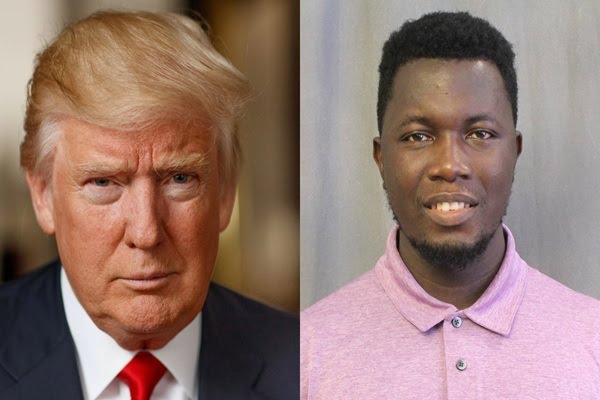
A Nigerian doctoral student, Matthew Ariwoola, has secured a major legal breakthrough in the United States after his student visa was suddenly revoked, leaving him at risk of arrest and deportation.

Ariwoola, who is in his fourth year of a Chemistry PhD programme and also teaches at the University of South Carolina (USC), was abruptly informed on April 8, 2025, that he could no longer continue his studies or teaching duties. According to university officials, his immigration status had been unexpectedly terminated in the federal Student and Exchange Visitor Information System (SEVIS), under the category: “OTHER – Individual identified in criminal records check and/or has had their VISA revoked.”
The reason came as a shock, as Ariwoola has no criminal history—not even a traffic offence.
Backed by the American Civil Liberties Union (ACLU) of South Carolina, Ariwoola filed a lawsuit against the U.S. Department of Homeland Security (DHS) and Immigration and Customs Enforcement (ICE), arguing that his fundamental rights had been violated.
“This student was given no chance to explain himself. No hearing, no notice, nothing,” said an ACLU spokesperson. “That is a clear breach of his right to due process under U.S. law.”
On April 18, a federal court issued a temporary 14-day restraining order, preventing the U.S. government from arresting or deporting him. Just a week later, authorities quietly restored his F-1 student visa status in SEVIS, without offering any explanation.
Despite attempts by the government to dismiss the legal case, the court rejected their motion and went ahead to extend the restraining order multiple times.
Then on June 13, the court delivered a major decision in favour of Ariwoola by granting a preliminary injunction, allowing him to fully resume his academic and teaching roles at USC. The ruling strongly indicated that Ariwoola is likely to win the case when it is finally decided.
“This judgment is not only a personal victory for Mr. Ariwoola, but also a clear message about the importance of fairness and accountability in immigration procedures,” the ACLU said.
Although the case is still in court, Ariwoola is back in the lab and classroom, working on research to improve drug treatments and mentoring young scientists.
His legal win is seen as a major step in the fight against arbitrary immigration enforcement affecting international students in the U.S.
