
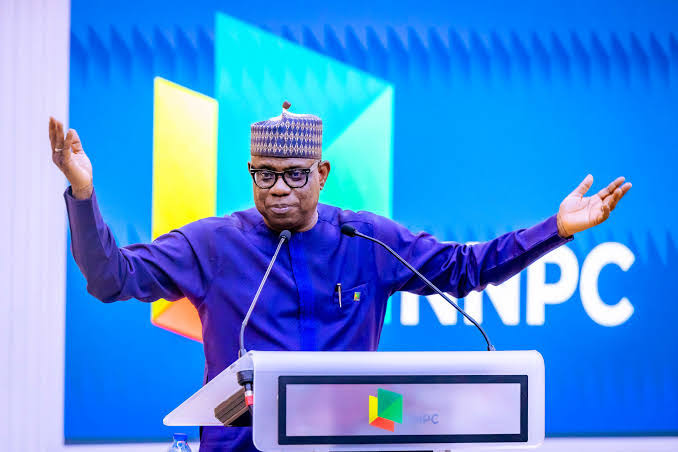
There is growing confusion surrounding the status of Bayo Ojulari, Group Chief Executive Officer of the Nigerian National Petroleum Company Limited (NNPCL), following reports that he was allegedly forced to sign a resignation letter by operatives of the Economic and Financial Crimes Commission (EFCC) on Friday night.

According to multiple sources, the incident, likened to a “civilian coup,” was allegedly carried out without clearance from the Presidency. EFCC Chairman Ola Olukoyede and Director-General of the Department of State Services (DSS), Adeola Ajayi, were reportedly involved in the operation.
However, the Presidency has dismissed the reports. Presidential spokesman, Bayo Onanuga, said on Saturday that Ojulari remains the substantive head of the national oil company. He was appointed in April 2025 to lead reforms in the sector.
Efforts to obtain a reaction from EFCC spokesman Dele Oyewale were unsuccessful as calls and messages to his phone went unanswered as of press time.
Protests and Corruption Allegations
The controversy is rooted in an alleged $21 million (₦34.65 billion) corruption case involving Ojulari. Civil society groups including OilWatch Nigeria and the Workers’ Rights Alliance have called for his immediate arrest and prosecution.
At a press conference held on July 31 at EFCC headquarters, the coalition accused Ojulari of economic sabotage, citing the continued shutdown of the country’s refineries and alleged moves to privatise key NNPCL assets.
They also referenced claims that Abdullahi Bashir Haske, a detained associate, had confessed to holding the $21 million on Ojulari’s behalf.
The coalition has since commenced a three-day protest at the National Assembly, EFCC headquarters, and NNPCL towers in Abuja, demanding full-scale investigation and prosecution.
Further allegations suggest a $21 million kickback scheme involving oil traders and pipeline contractors. The EFCC was said to have acted after a whistleblower reported changes in fund collection procedures, leading to the freezing of an implicated account.
Ongoing Scrutiny
In May 2025, the Socio-Economic Rights and Accountability Project (SERAP) called on anti-corruption agencies to probe alleged failure by the NNPCL to remit ₦500 billion to the Federation Account between October and December 2024.
While pressure mounts from some quarters, other groups have risen in defence of Ojulari.
The Coalition for Good Governance and Change Initiatives (CGGCI) and the Human Rights Writers Association of Nigeria (HURIWA) argued that the protests were politically motivated attempts to derail the NNPCL reforms.
They praised Ojulari’s reforms, including the introduction of real-time contract monitoring, audits of old deals, and improved fuel distribution systems that have helped reduce queues across the country.
Allegations of Misconduct
Despite the support, some critics have accused the NNPCL boss of extravagans spending, citing a luxury retreat in Kigali that reportedly involved private jet travel. There have also been complaints of a toxic work culture leading to several staff resignations.
The Niger Delta Environmental Justice Coalition (NDEJC) condemned the reported EFCC-DSS action as politically influenced but acknowledged Ojulari’s efforts in increasing oil production and revenue remittances.
As of Sunday morning, no official statement has been released by the EFCC confirming Ojulari’s arrest, prosecution, or resignation, leaving the situation murky amid conflicting narratives and heightened political tension.
