
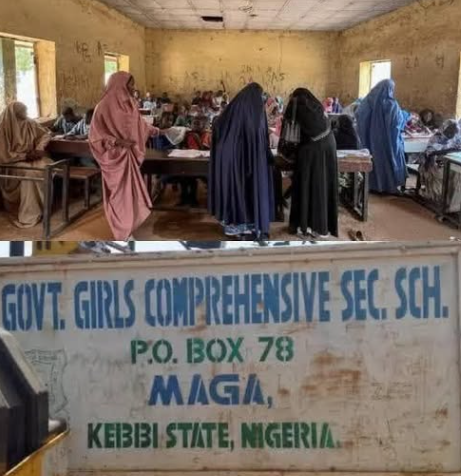
The United Nations Children’s Fund (UNICEF) has strongly criticised the abduction of 25 students from Government Girls Comprehensive Senior Secondary School, Maga, in Kebbi State, calling the incident a disturbing reminder of the dangers children continue to face while seeking education in Nigeria.
The agency stressed that children must never be exposed to harm in the course of learning, insisting that classrooms must remain secure environments rather than spaces of fear.

Addressing journalists at the UN headquarters in New York, Deputy Spokesperson Farhan Haq demanded the immediate release of all abducted students and conveyed condolences to families affected by the attack.
UNICEF expressed solidarity with the community and wished quick recovery for those injured in the incident, which has sparked renewed concerns over student safety in conflict-prone areas.
The organisation noted that international humanitarian and human rights laws require the protection of students, teachers and school facilities from all forms of violence, urging authorities to bring the perpetrators to justice.
Nigeria’s commitment to the Safe Schools Declaration, which it endorsed in 2015, was also highlighted. The Declaration—launched at the First International Conference on Safe Schools in Oslo—obliges signatories to safeguard educational facilities and uphold children’s access to learning even during conflict.
UNICEF stated that it continues to work with the government, civil society organisations and local communities to strengthen child protection systems and enhance safety in schools nationwide, saying these efforts remain crucial to preventing similar tragedies.
The agency additionally pointed to longstanding gaps in school security. A recent UNICEF assessment, released 10 years after the Chibok abductions, showed that only 37 per cent of schools across 10 high-risk states have early-warning mechanisms to identify threats such as armed violence.
The report also highlighted uneven performance across six areas of school safety—governance, violence prevention, natural hazards, conflict, everyday risks and infrastructure—underscoring the urgent need for Nigeria to ensure that every child can learn without fear.
